Brain duels that end in friendships
Kwazy matches you with someone at your level for a quick one-on-one brain game. Win or lose, every match can end in a connection: add your opponent, challenge them again, or chat once you are friends.
Why Kwazy
Most people fill the small gaps of their day with a feed. Brain games are the better habit, but they are solo: you play a puzzle, you get a score, and nobody is on the other side.
Kwazy turns those gaps into a duel. A quick game against someone at your level, and at the end a real person you can add, rematch or talk to. The social graph is built from duels, not from feeds or swipes.
Four rules every screen follows
Written down before the first screen, and used to settle every argument after it.
Start in seconds, feel fair
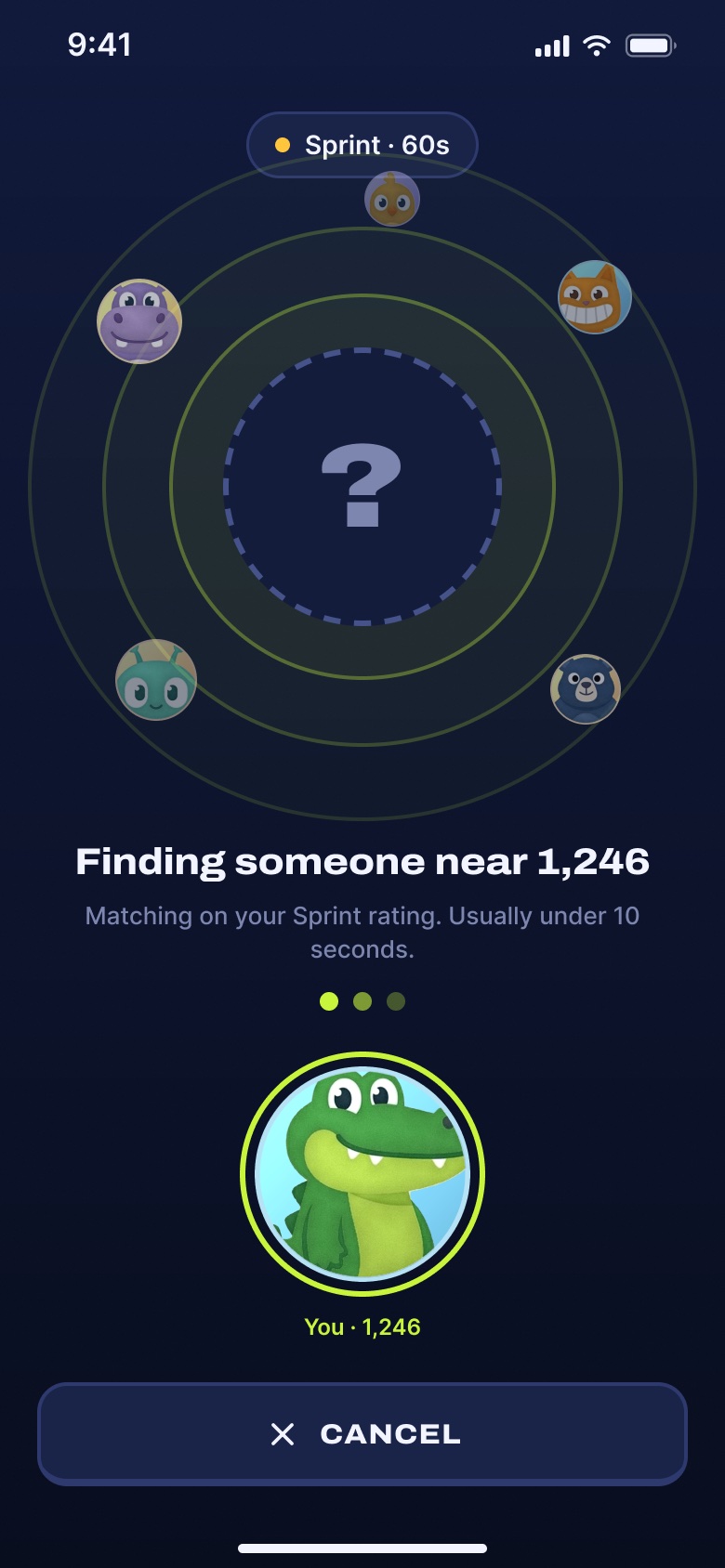
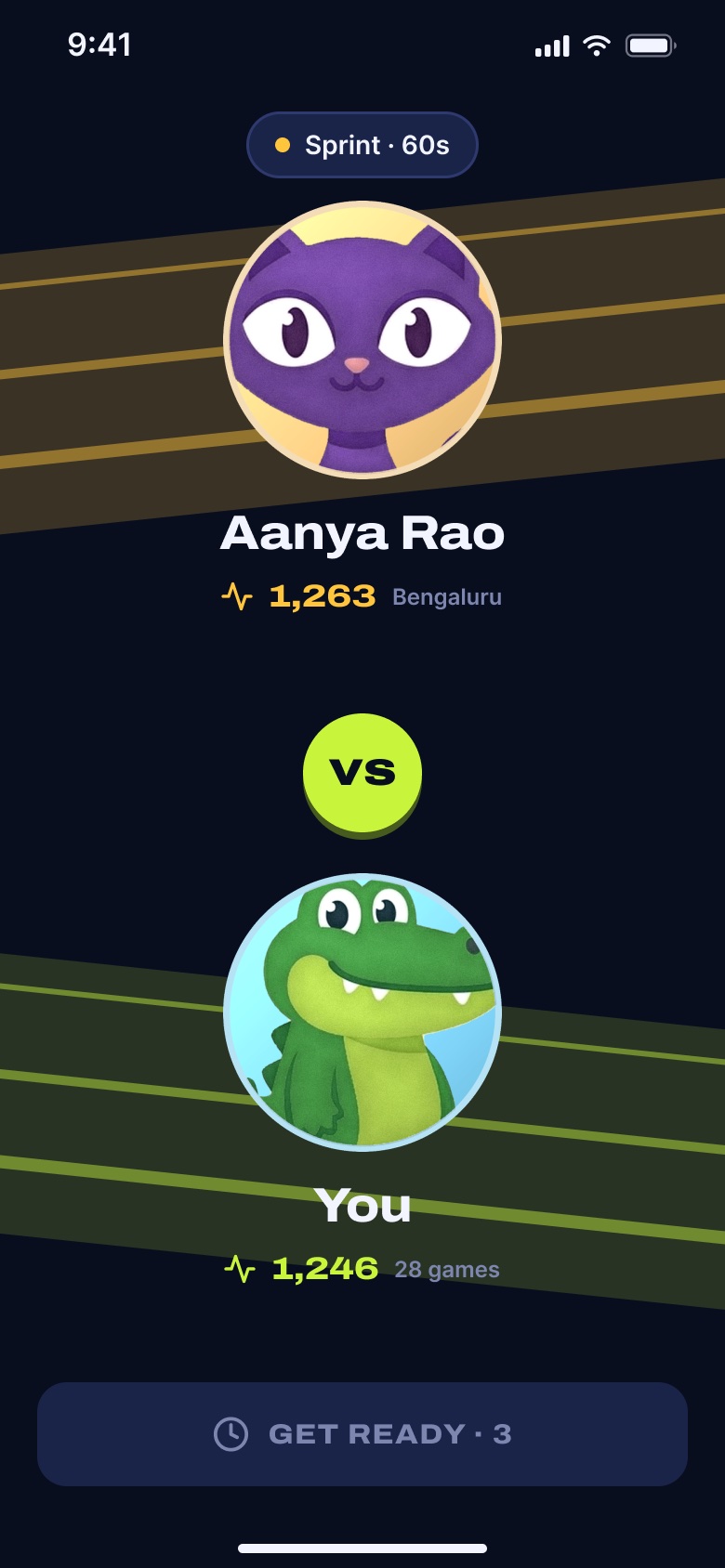
Matchmaking finds someone at your level, and Kwazy Bot steps in if nobody turns up within eight seconds.
Every result has a human next step
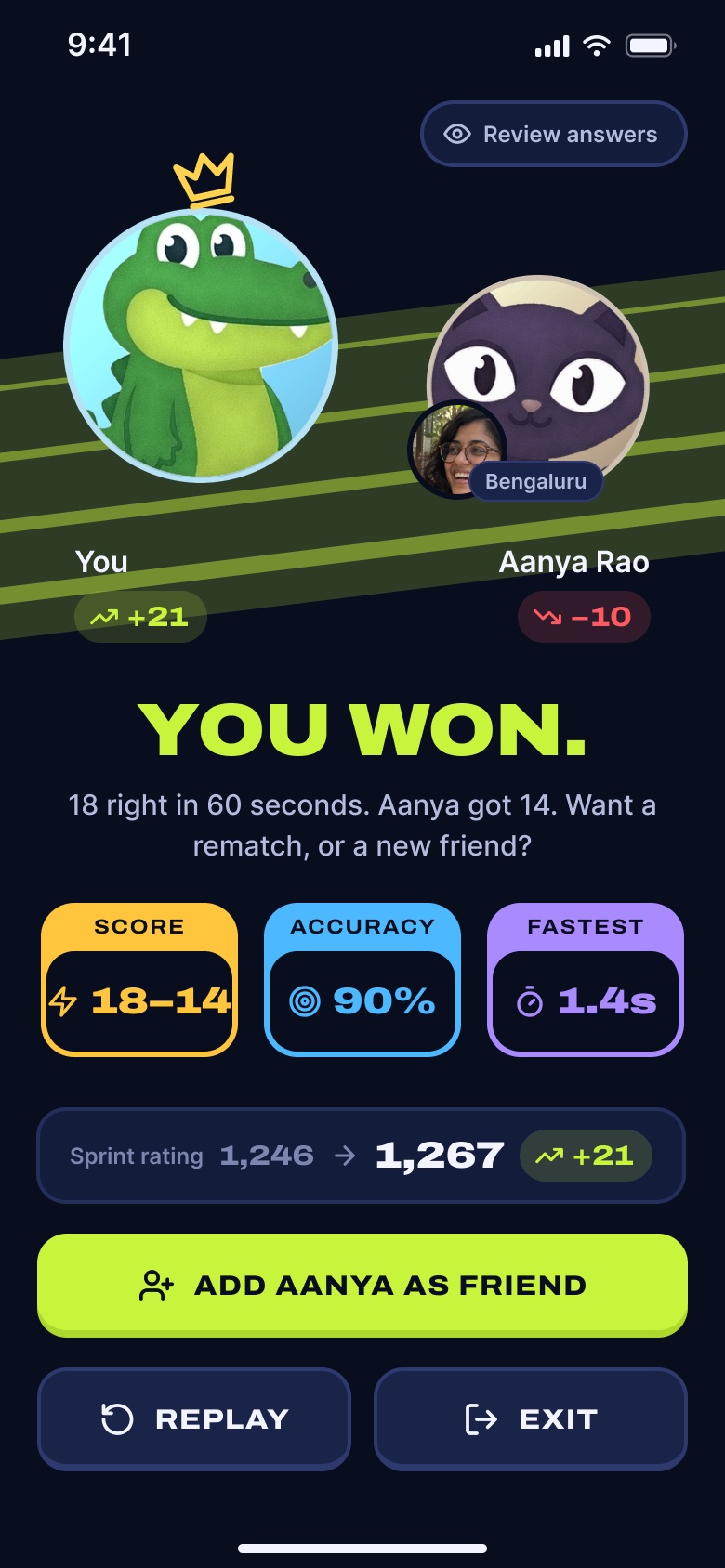
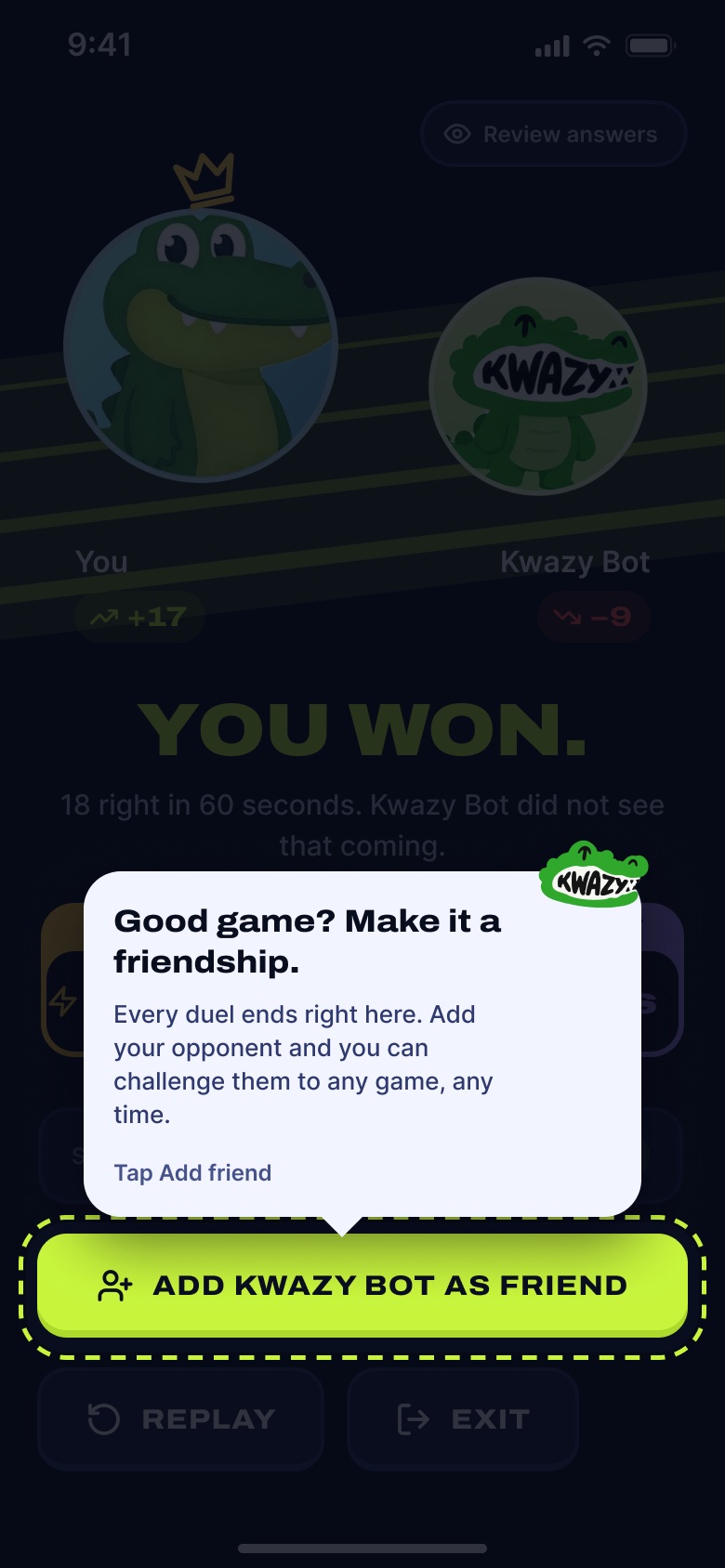
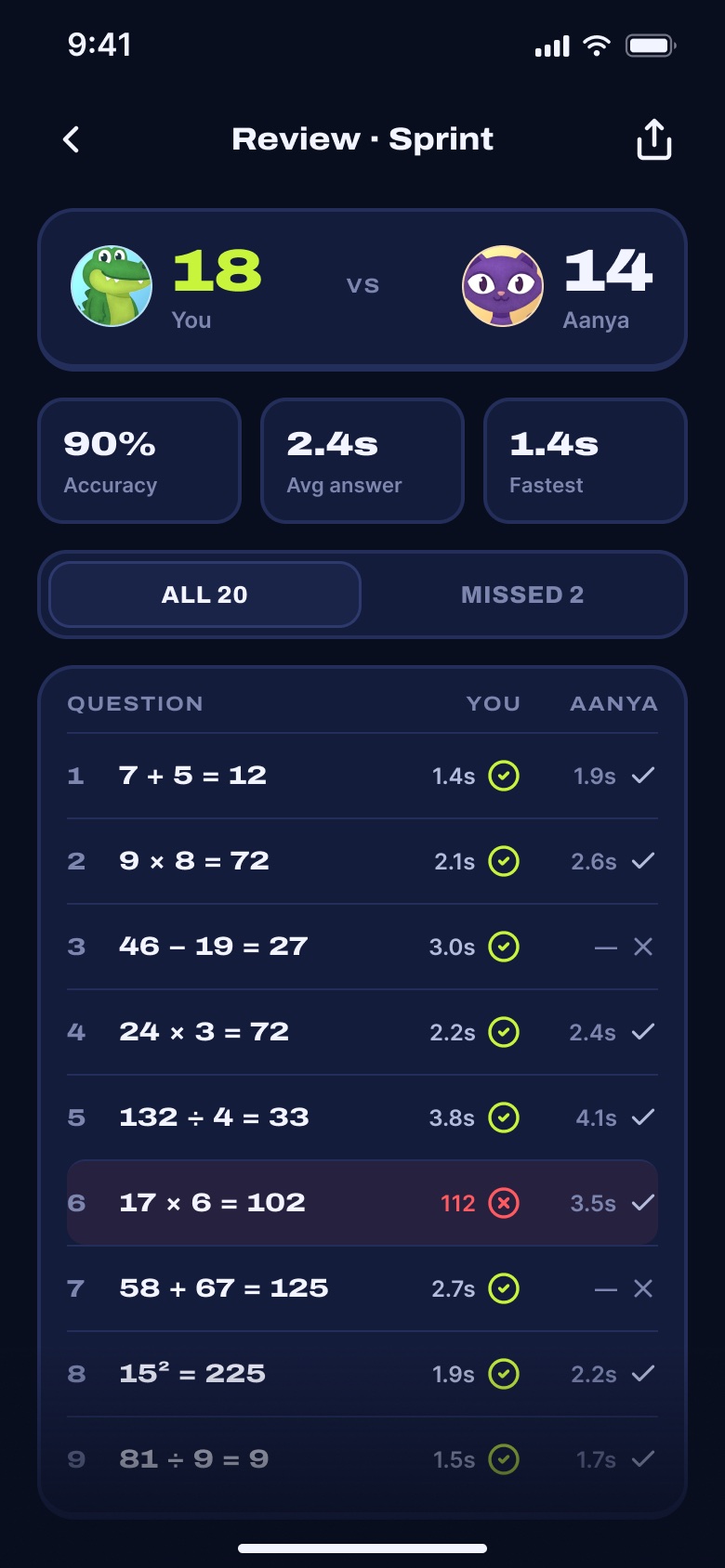
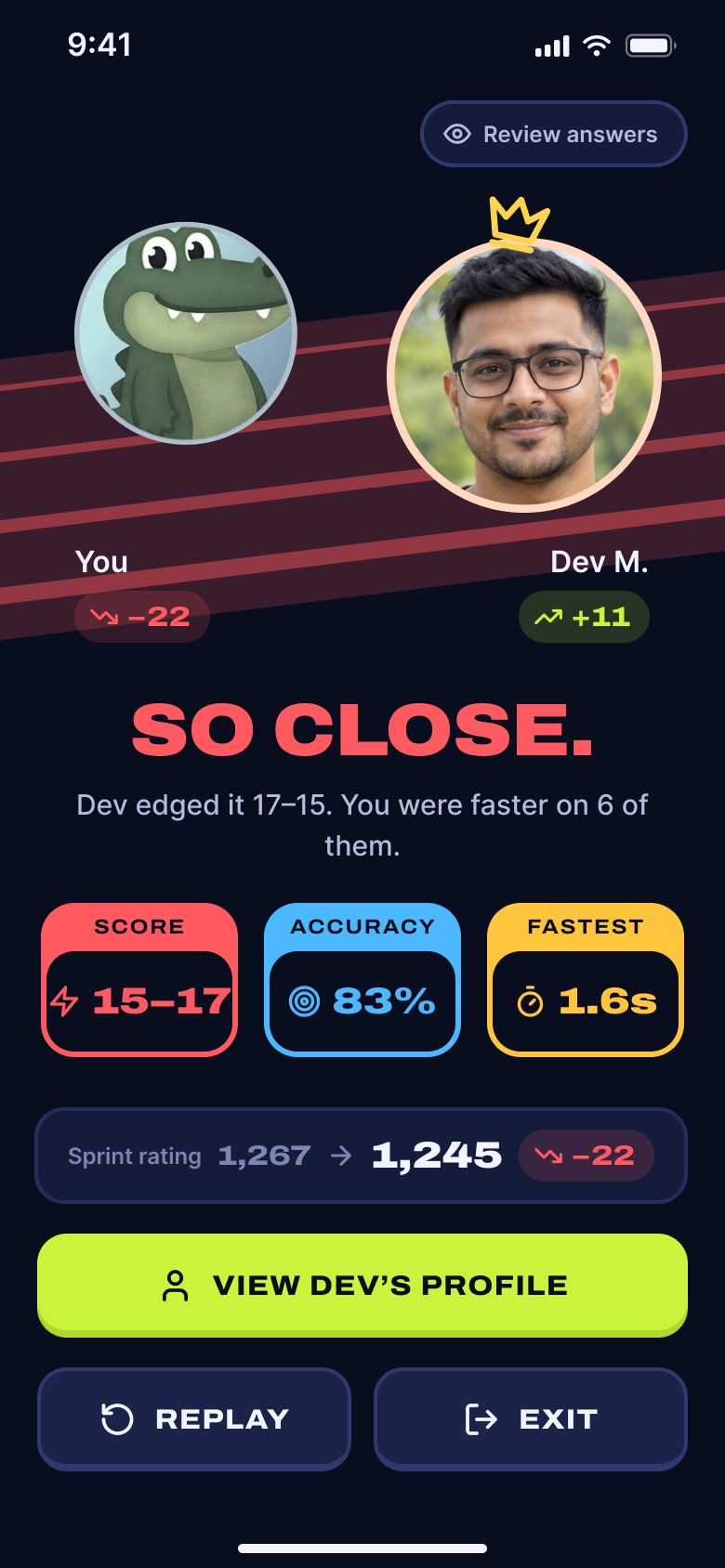
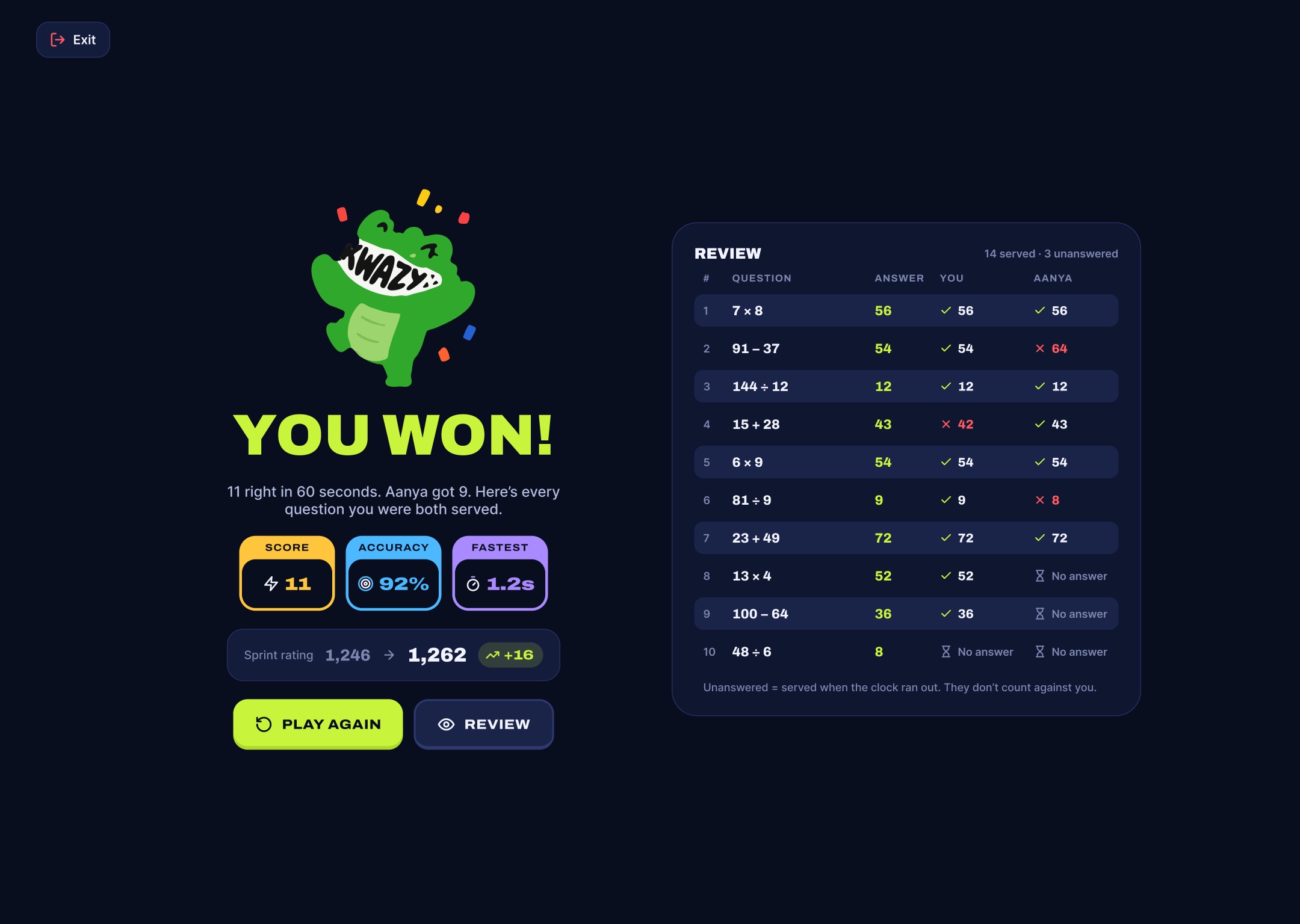
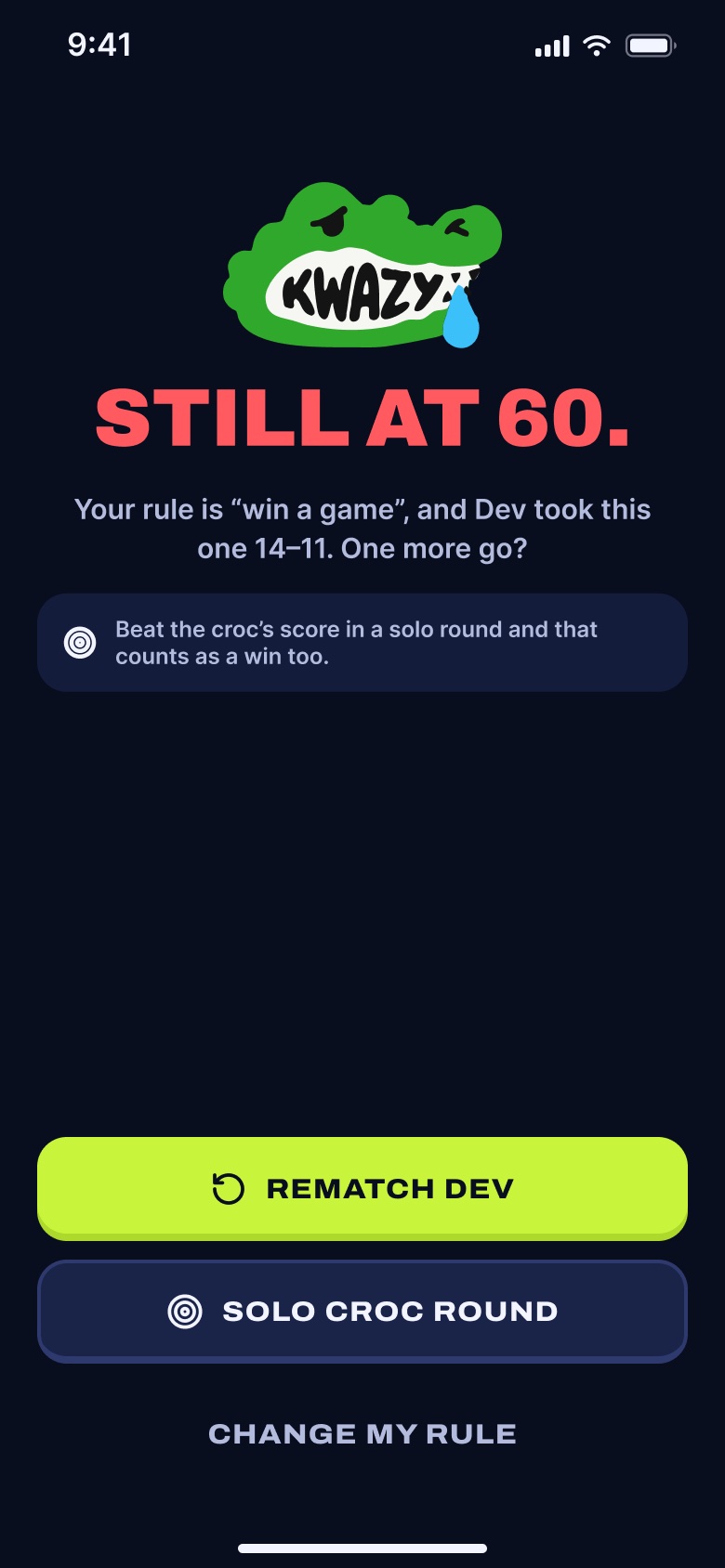
Win, lose or tie, the result screen offers the same three things: add, rematch or review.
Safe by default
Teens play on parent-approved accounts, chat opens only between friends, and location is only ever approximate.
Never block the core loop
Turning off location, notifications or ScrollBuddy never stops anyone from playing.
The first opponent is also the first friend
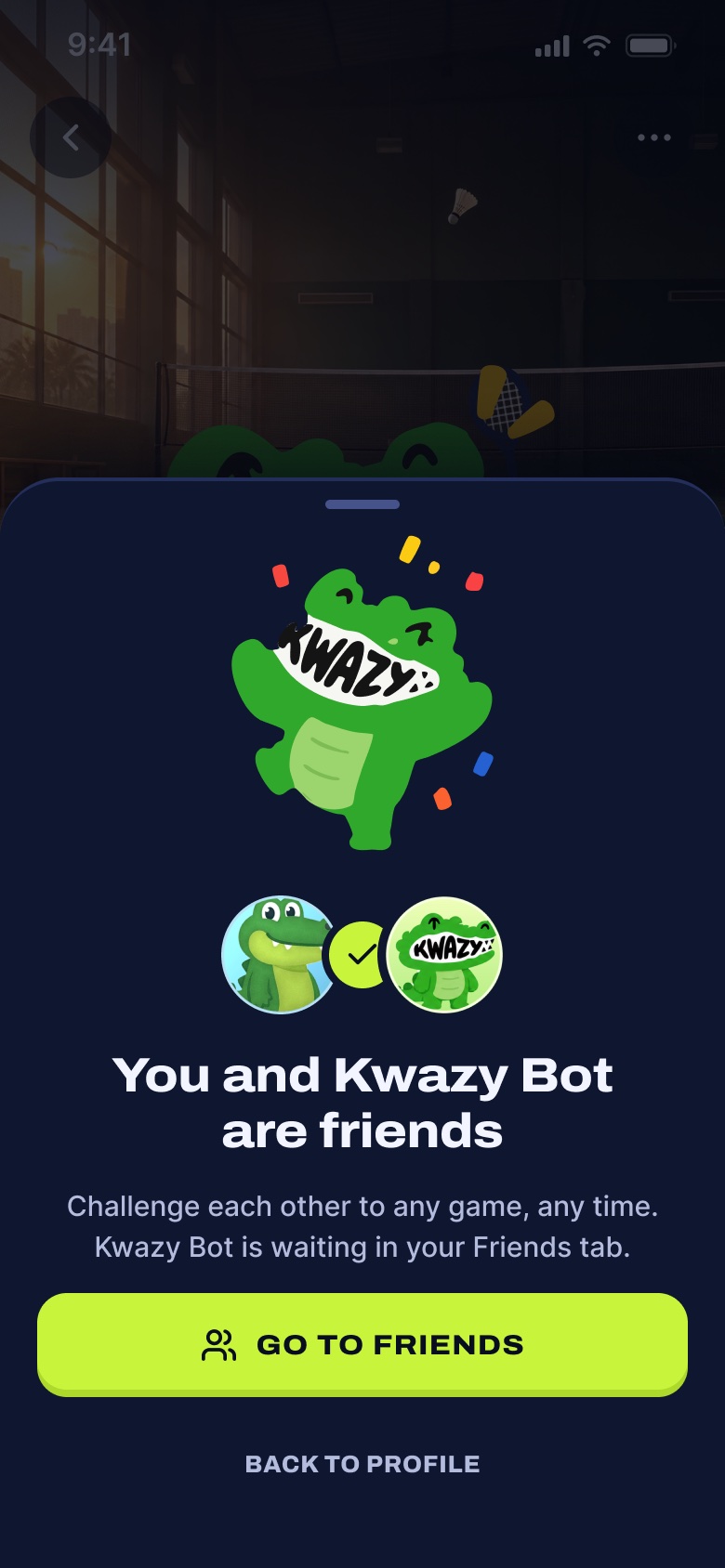
Sign-in, a monster avatar, then a gentle tutorial duel against Kwazy Bot. The tutorial ends by pointing at Add friend, so the first thing a new player learns is that opponents become friends.
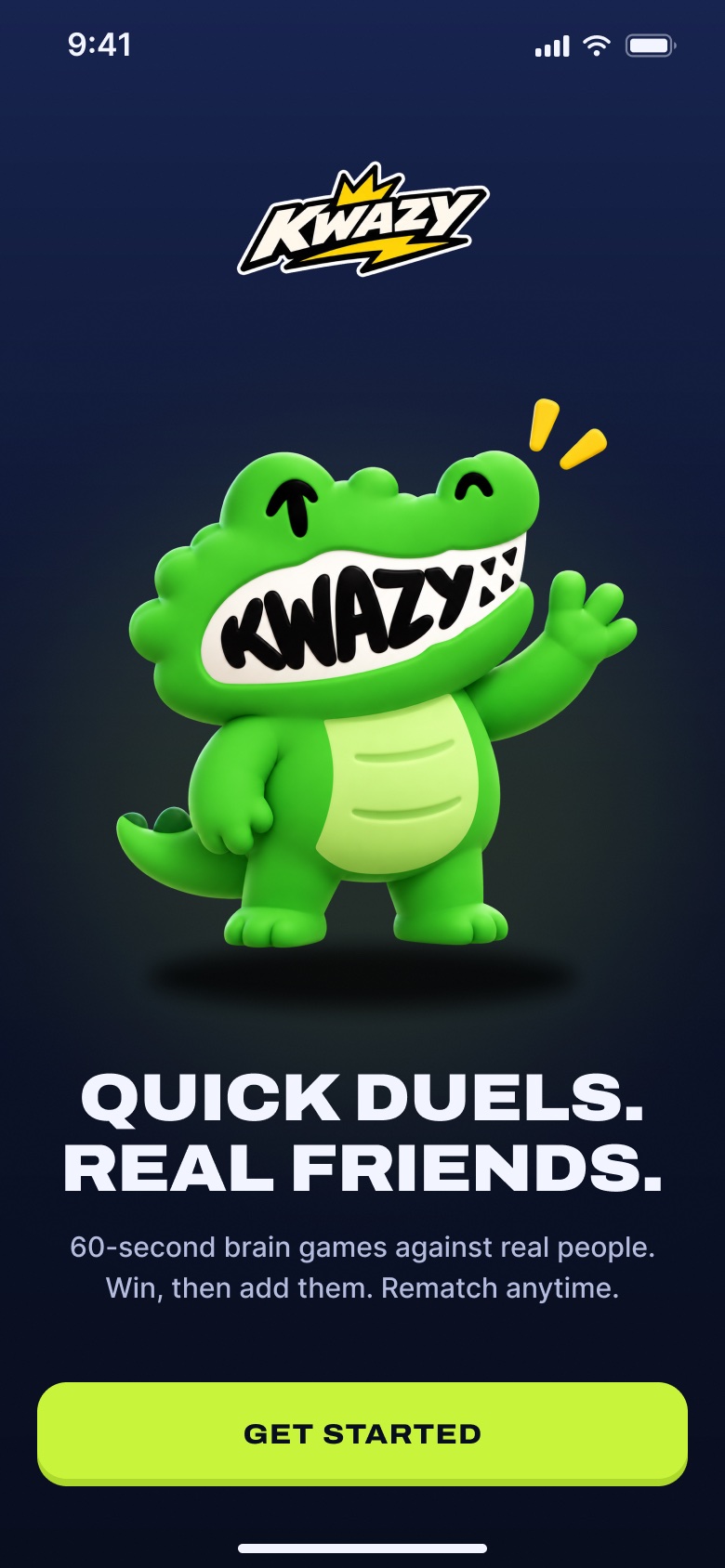
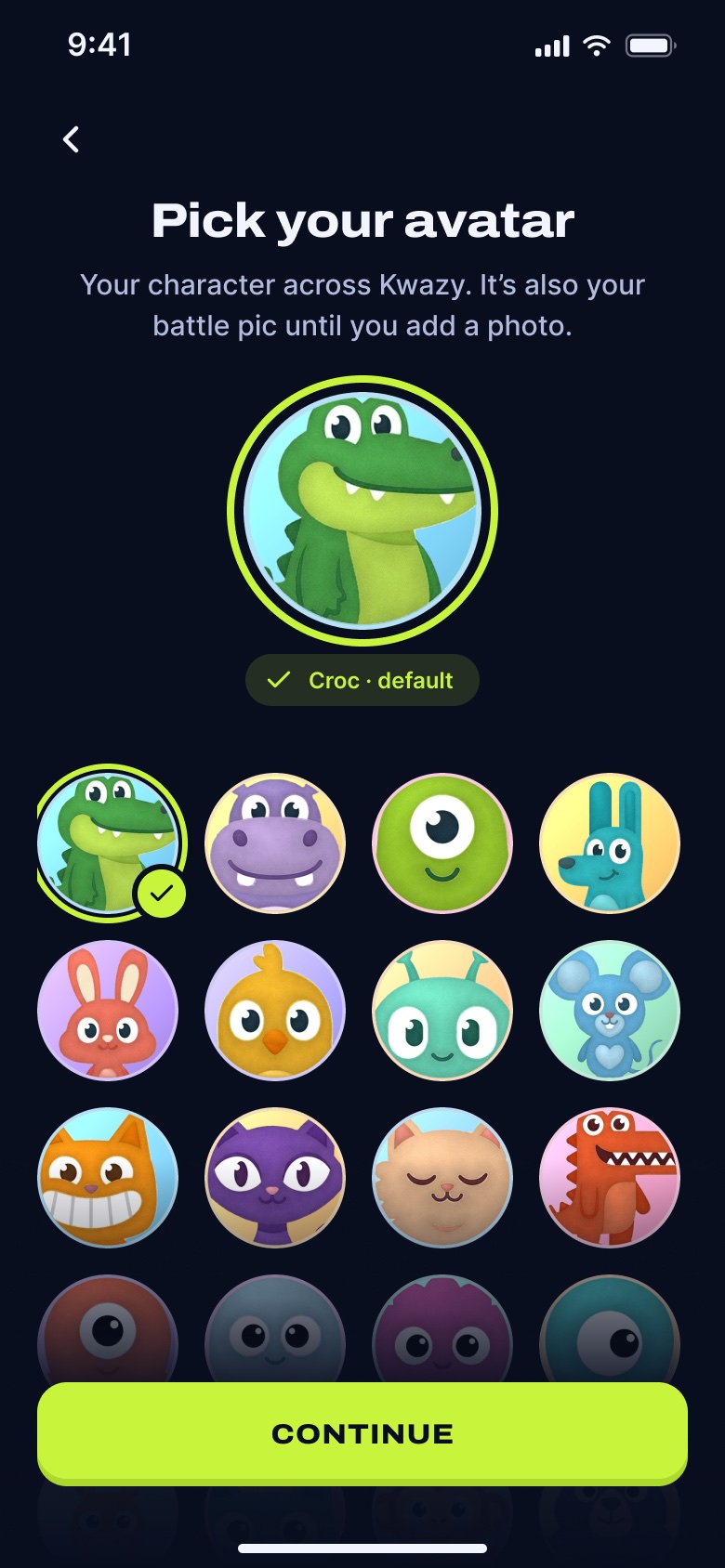
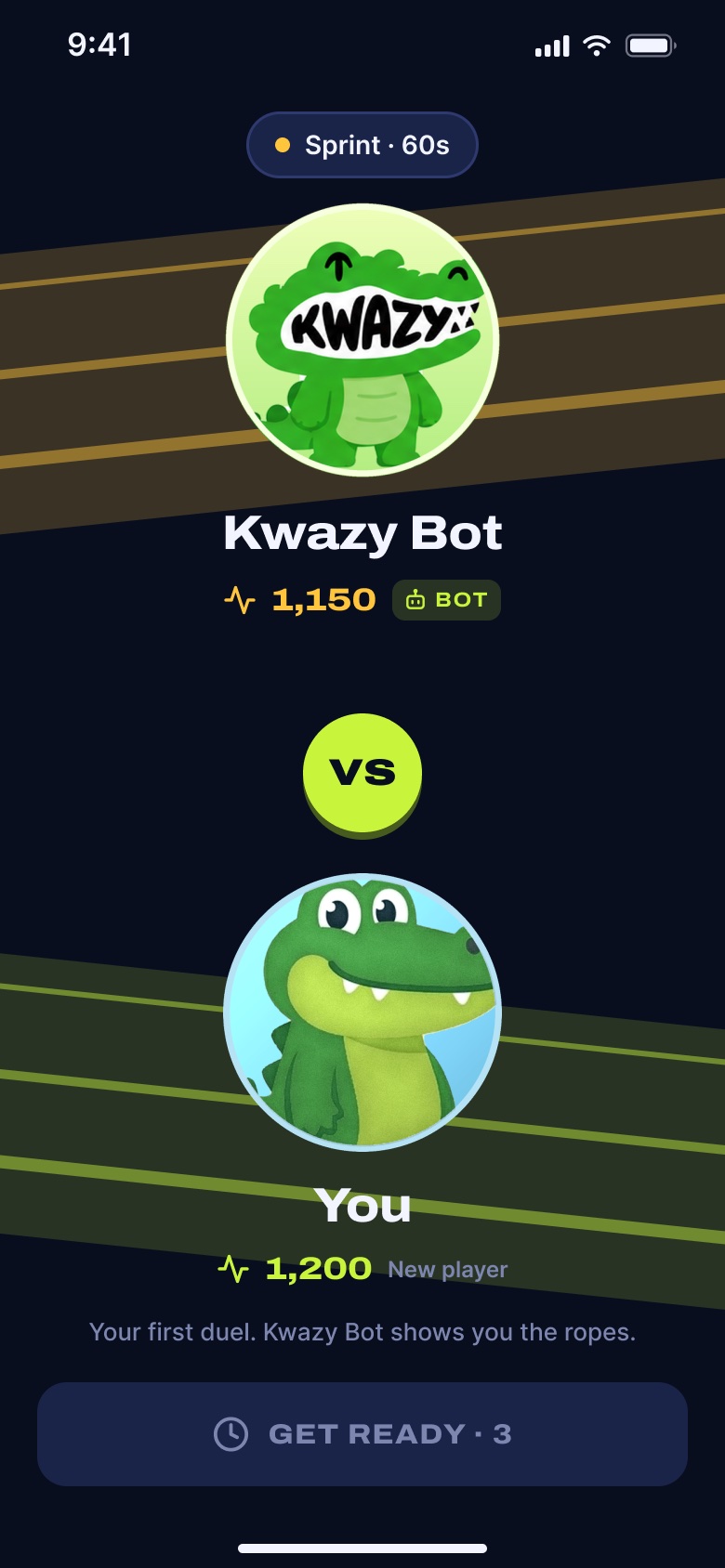
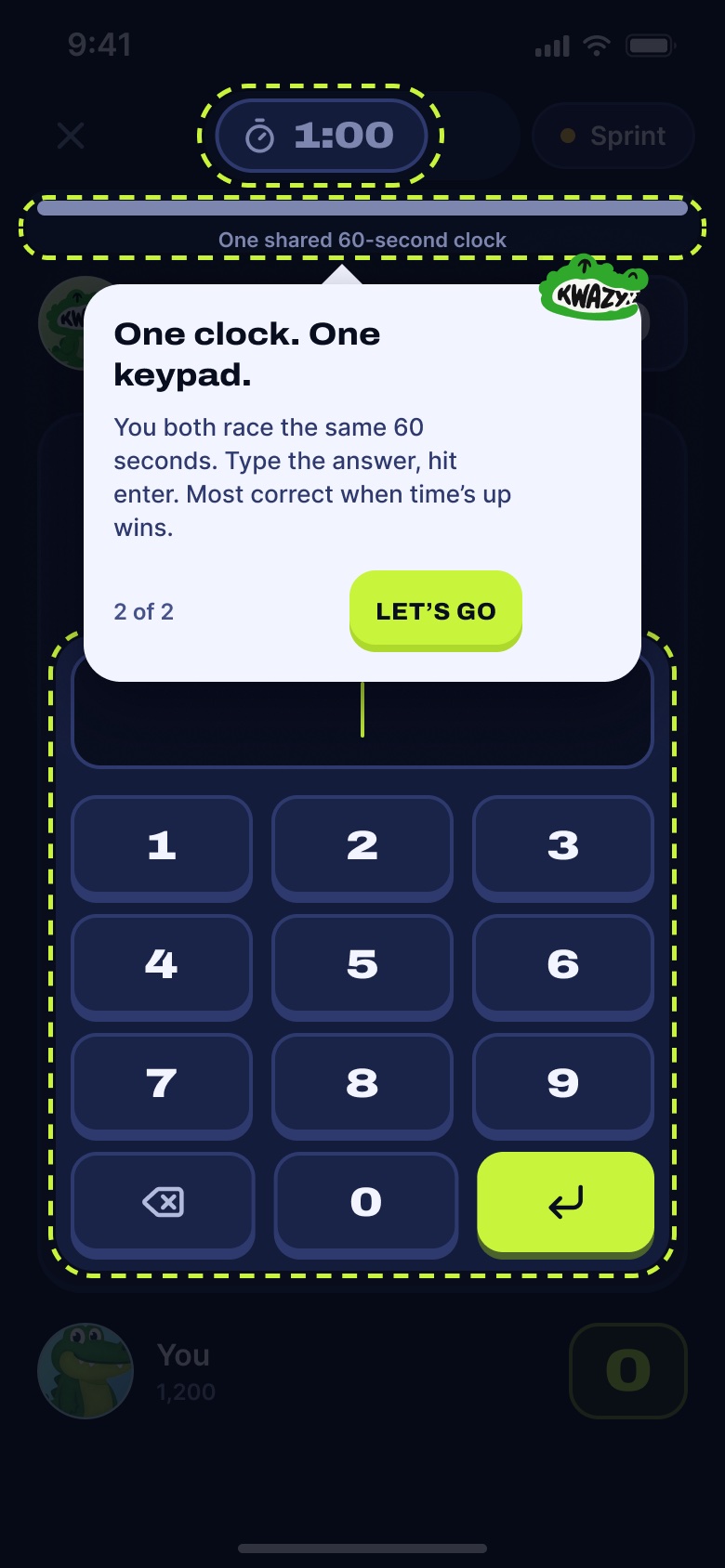
The core loop, start to finish
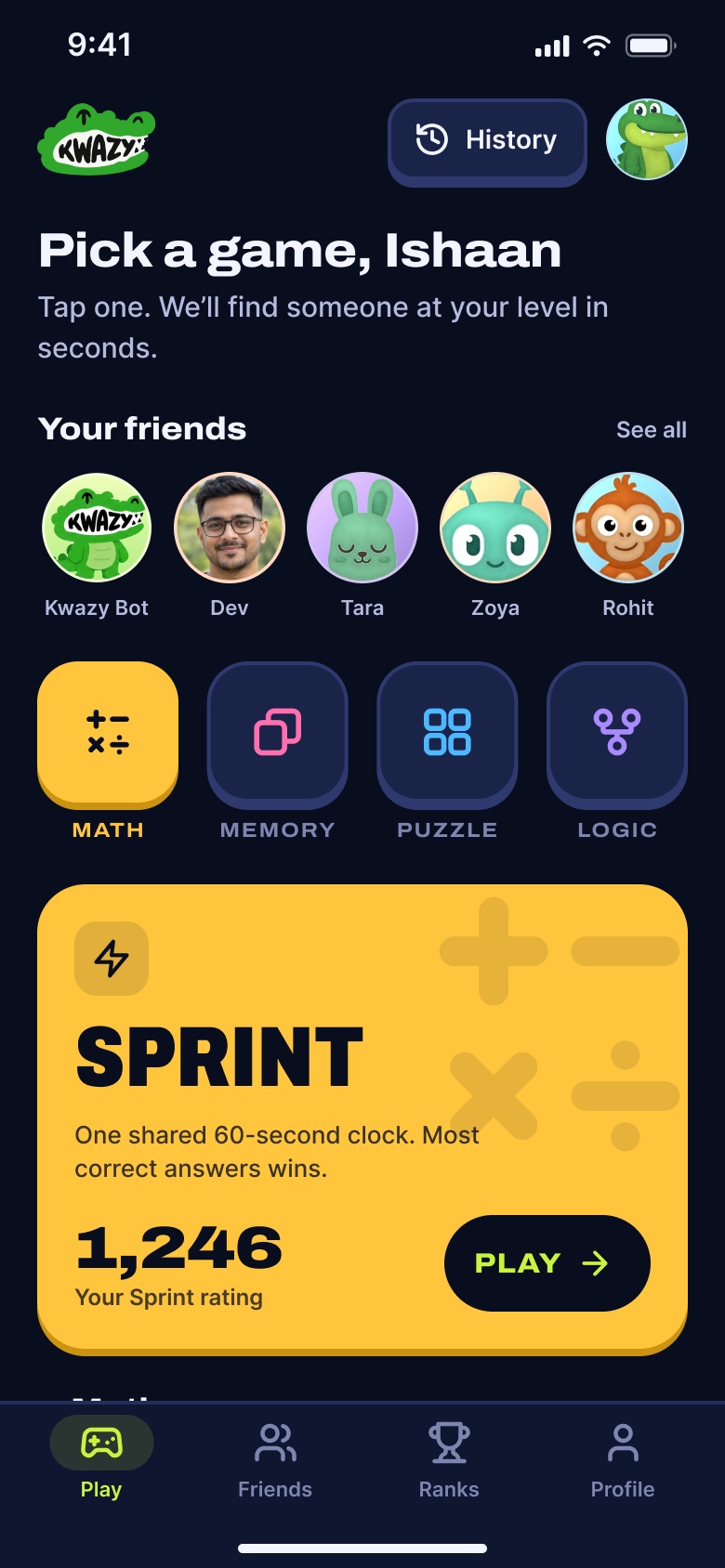
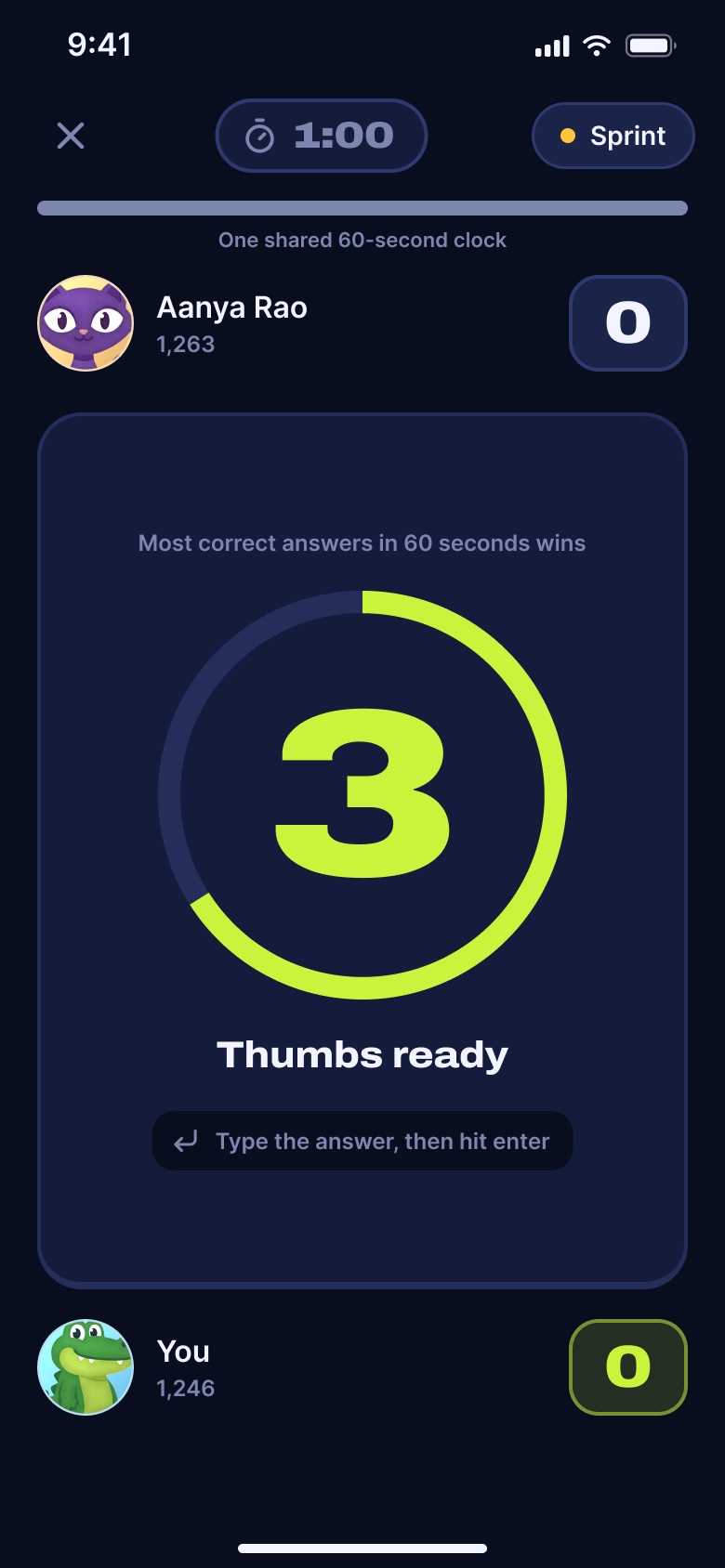
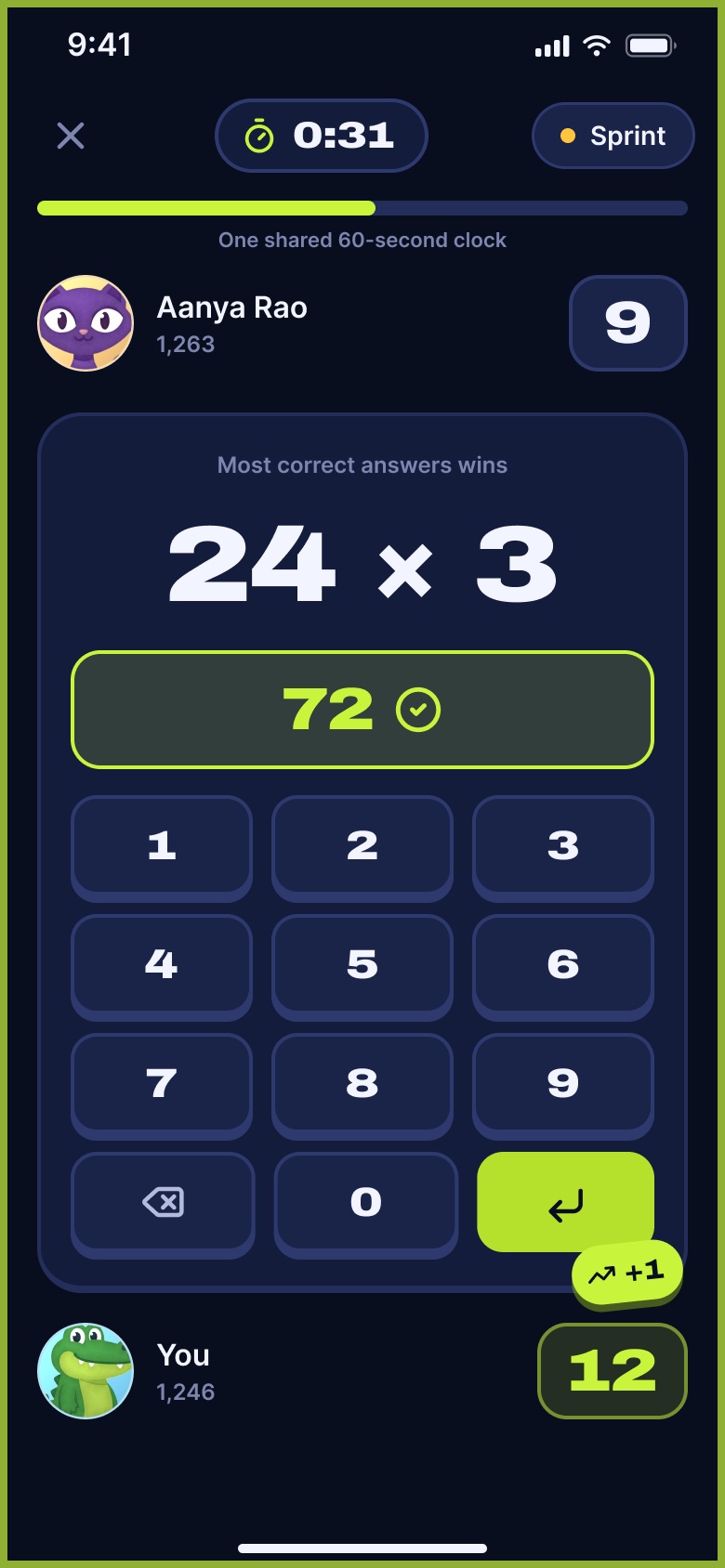
Pick a game, get matched in seconds, count down, play, see your rating move, then review every question. The loop is the same in every game, so learning one teaches all eleven.
Eleven games, three formats
Maths, words, logic, memory and puzzles all fit one of three shapes, so a new game never needs a new set of rules on screen.
One shared clock
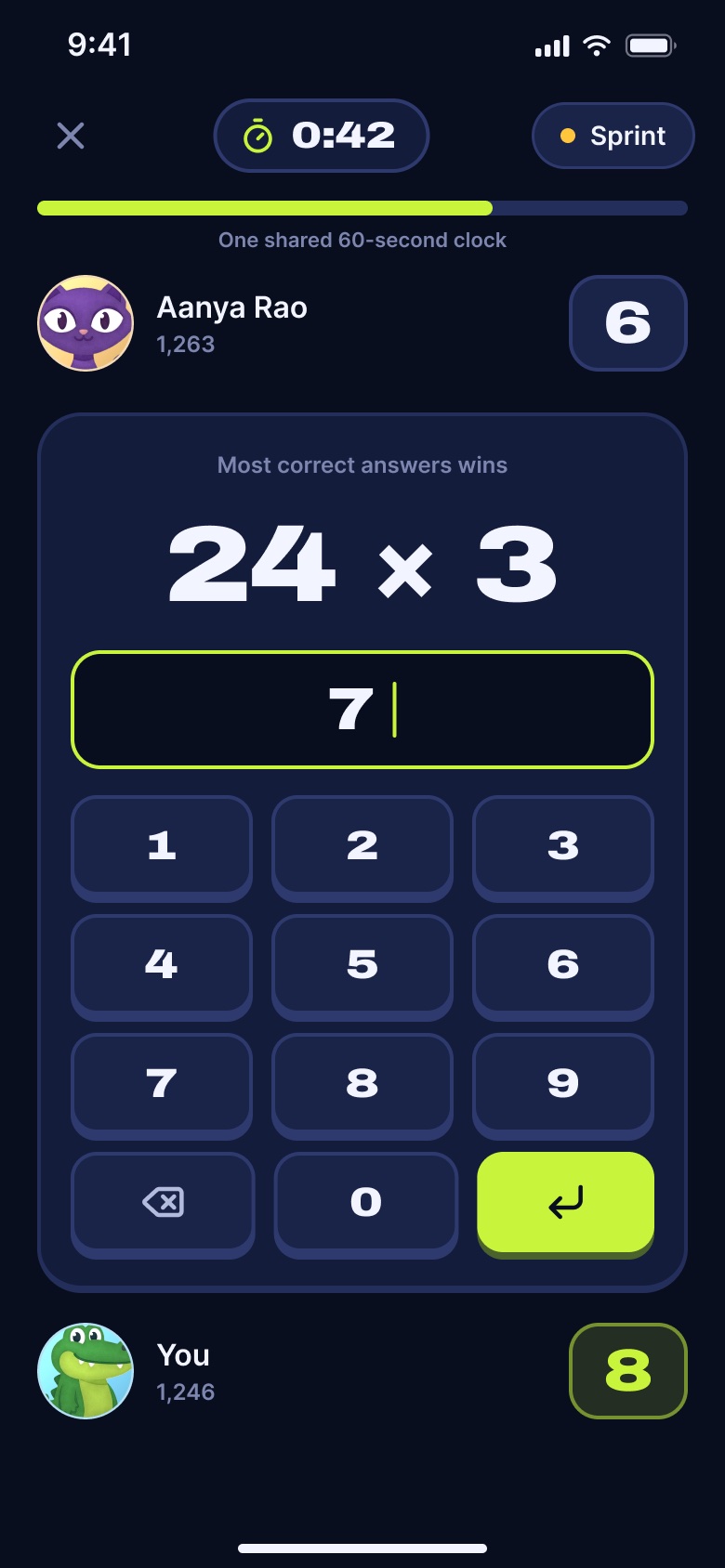
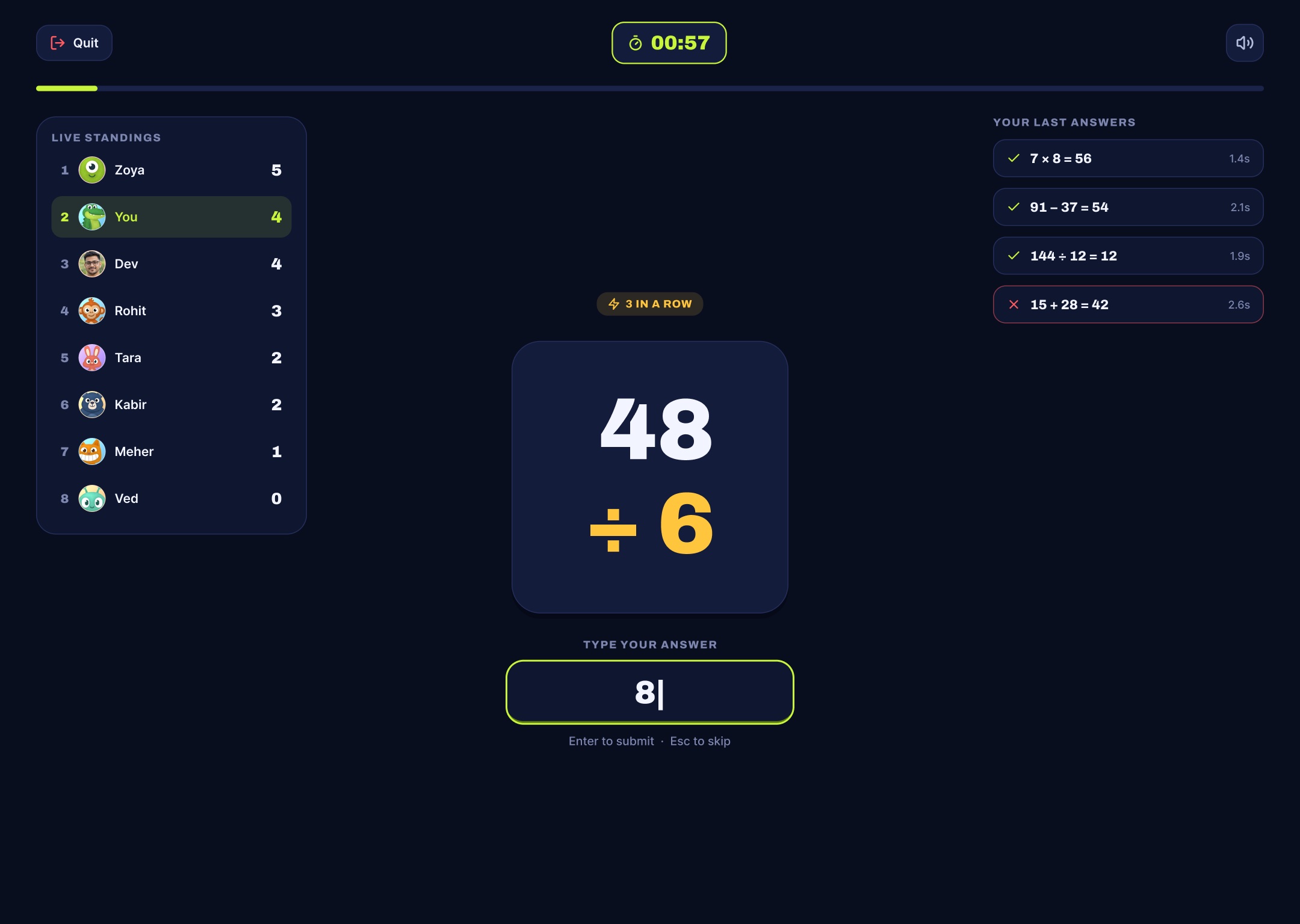
A stream of questions and sixty seconds. Most right answers wins.
- Games
- Sprint, Mind Snap
Same question, same moment
Both players see each question together, round by round. First right answer, every right answer, or word points score.
- Games
- Fastest Fingers, Flash Anzan, Pinball Recall, Math Maze, Logic Duel, Tile Clash
One puzzle, first clean finish
The same grid for both. A clean grid wins on the spot; at time-out, more progress wins.
- Games
- Sudoku, Cross Math, Ken Ken
Every game, built for a thumb
Each duel had to read in a glance and play with one hand. Every one gets a how-to-play card that shows your level before you start.
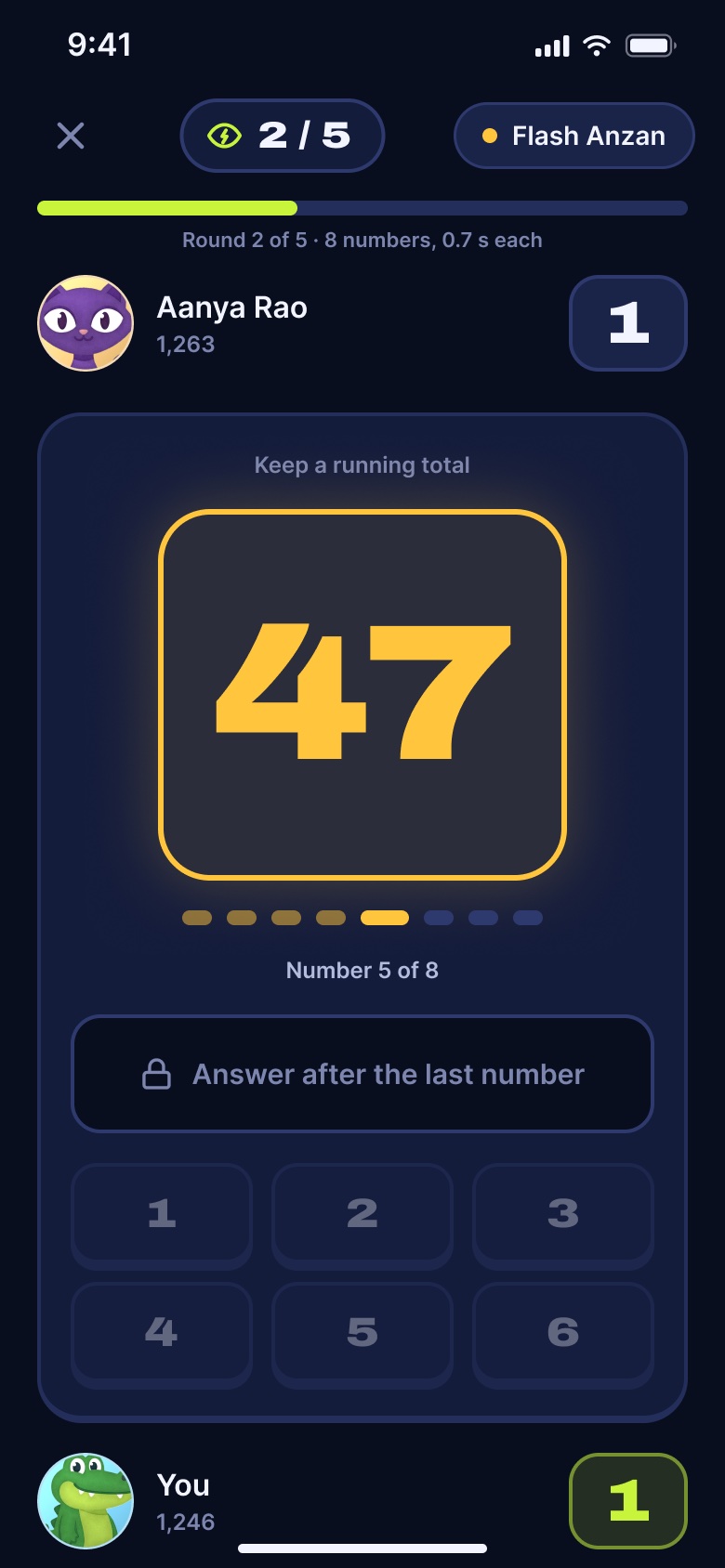
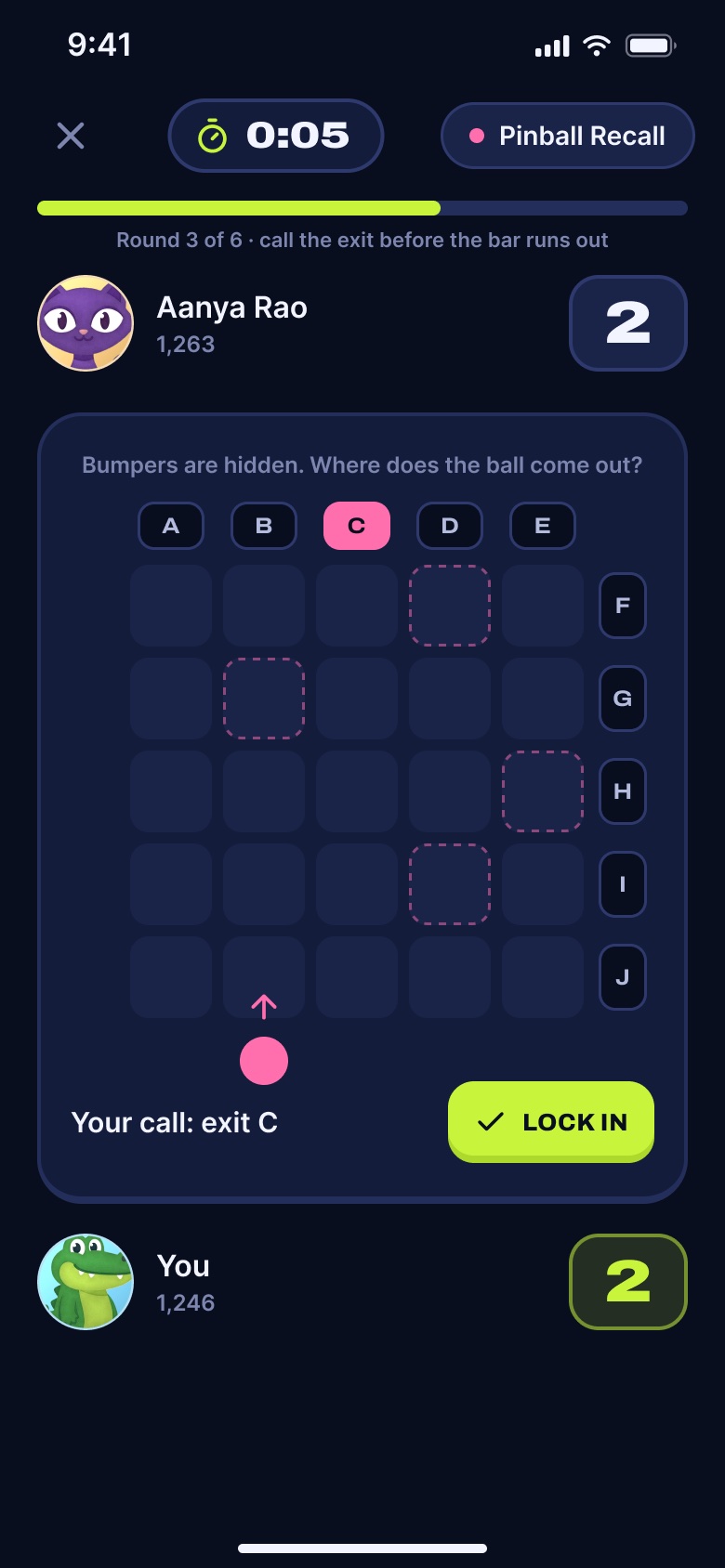
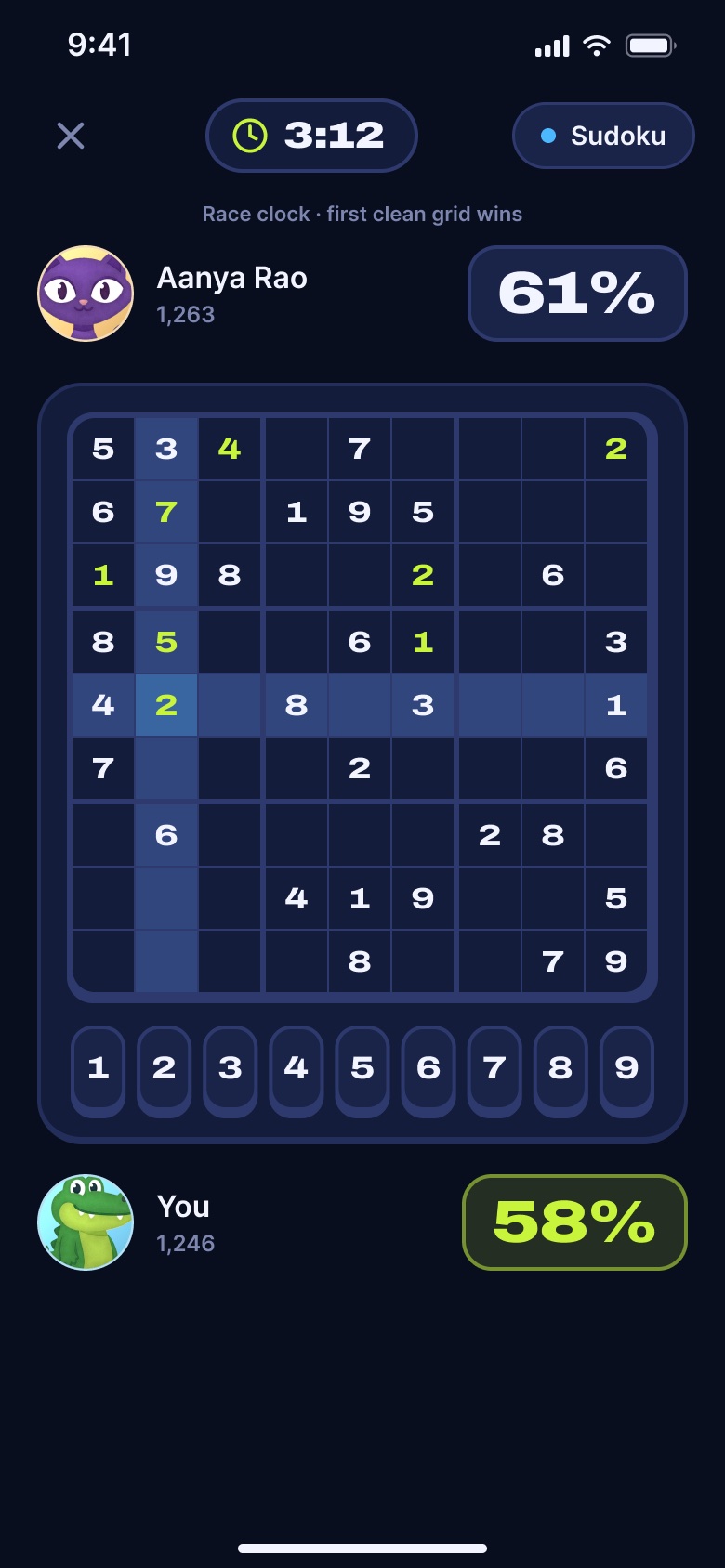
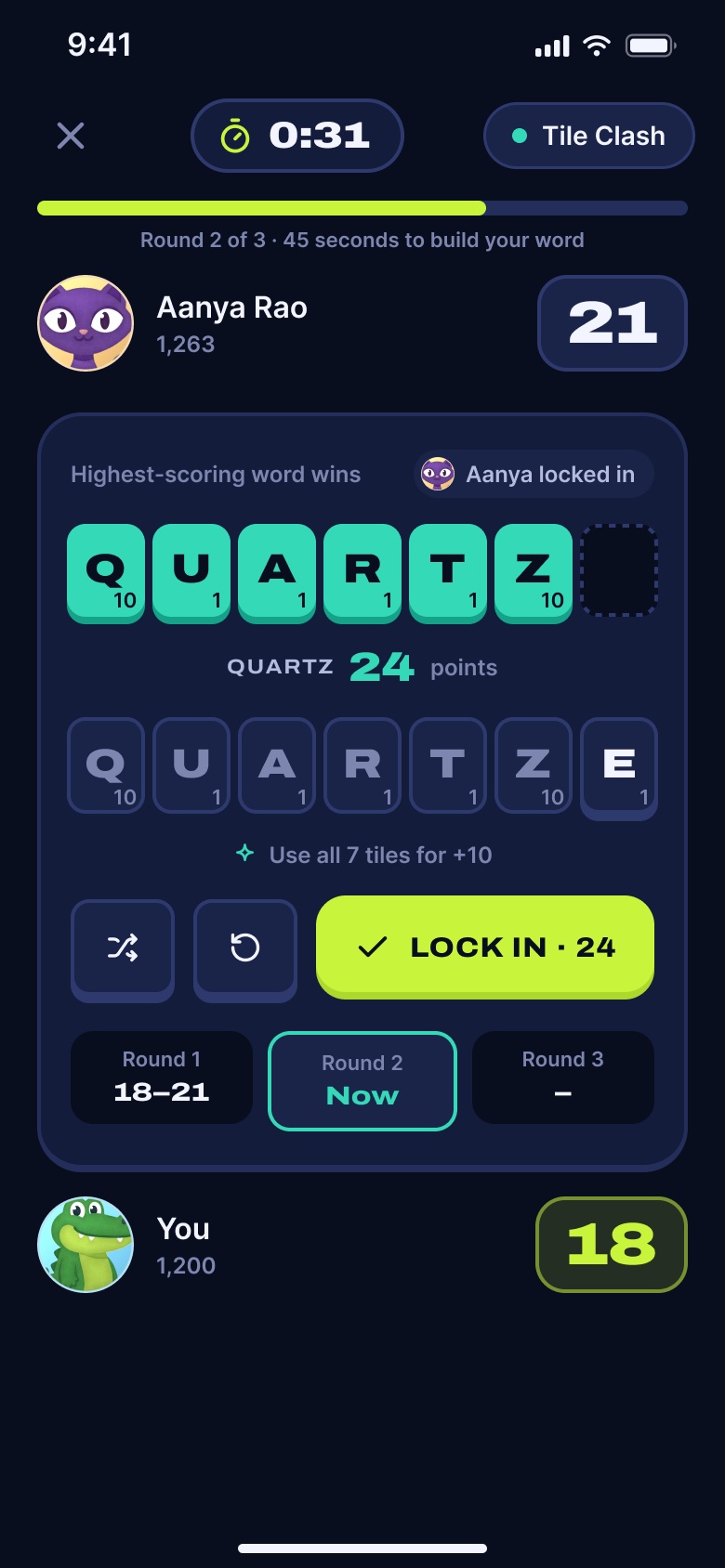
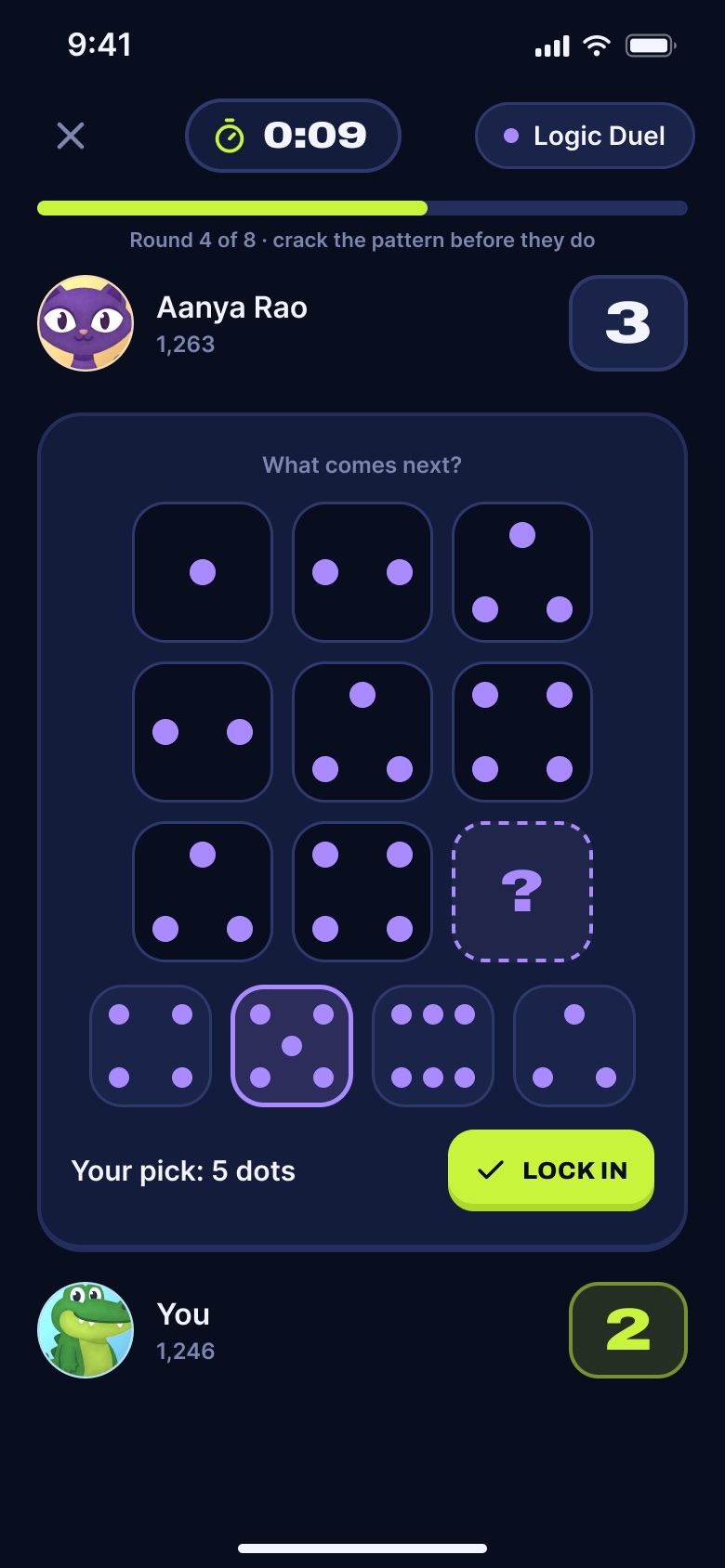
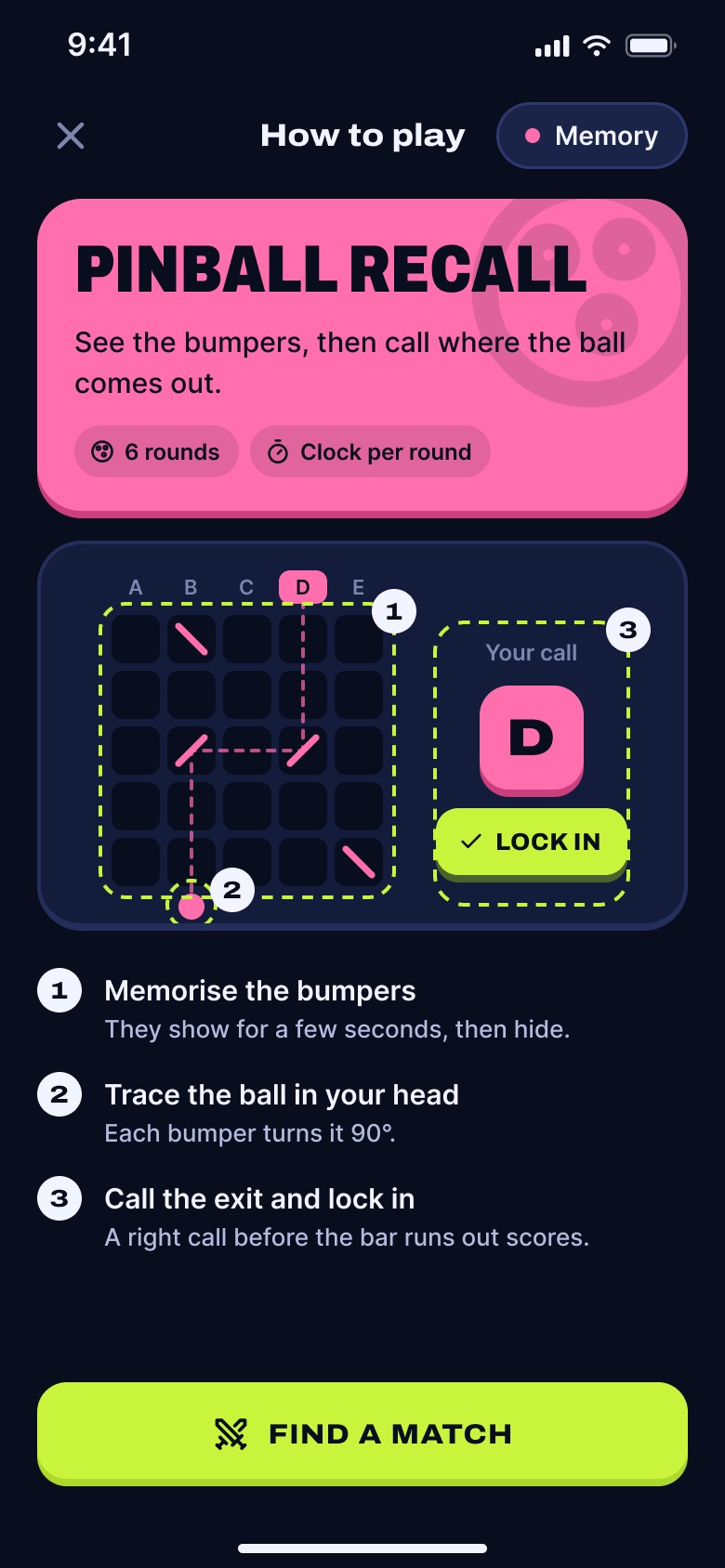
A difficulty ramp, so newcomers aren’t crushed
A fair duel matters more than a hard one. Every game has five levels, and the game picks yours.
- Five levels per game: Warm-up, Easy, Steady, Sharp and Expert.
- Your level is the lower of two ceilings: games played and rating. A losing run drops you back.
- A duel always runs at the lower of the two players’ levels.
- Lower levels get easier content and more time: Warm-up Sudoku has 18 gaps instead of 48.
- Kwazy Bot plays gentler at lower levels too.
- Every threshold is marked as a proposal, to tune with real players.
Opponents become friends
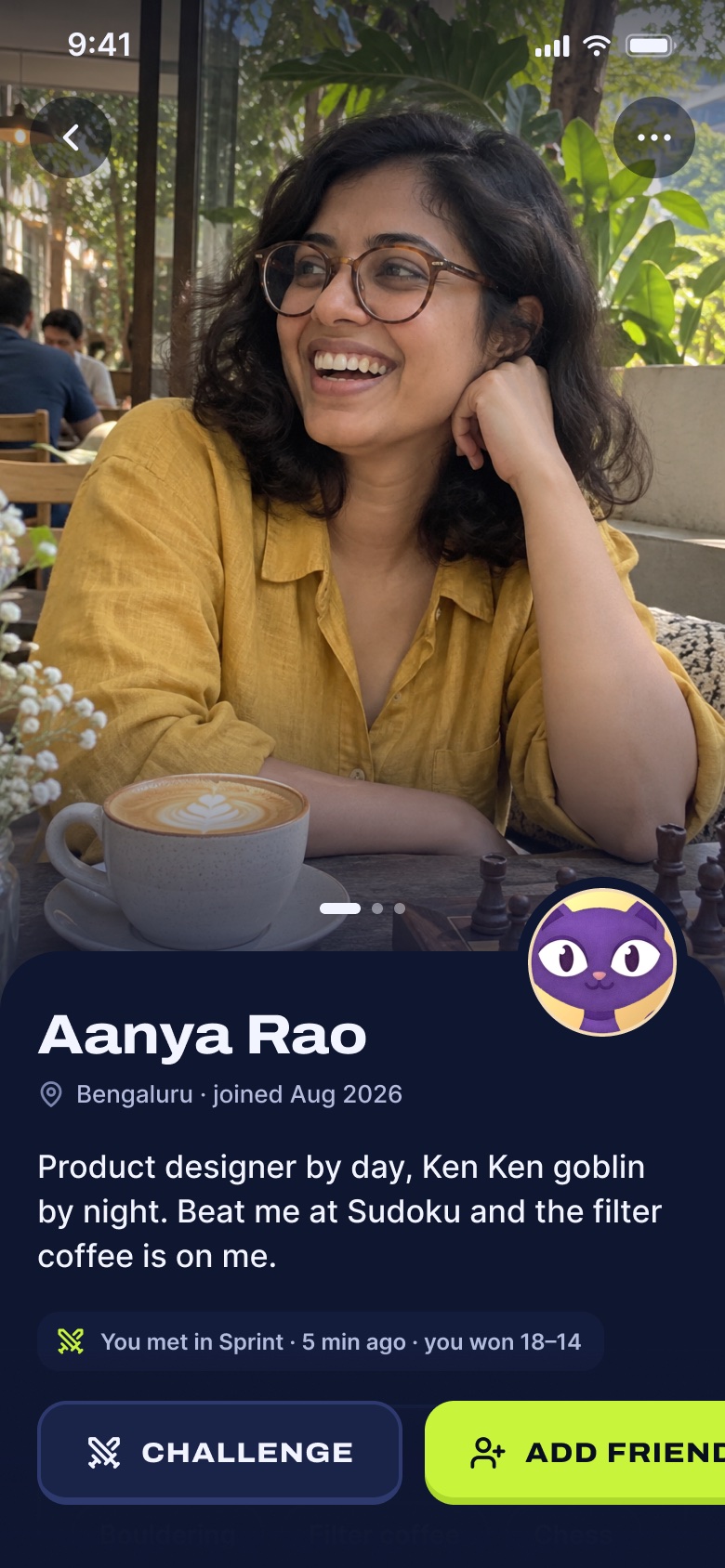
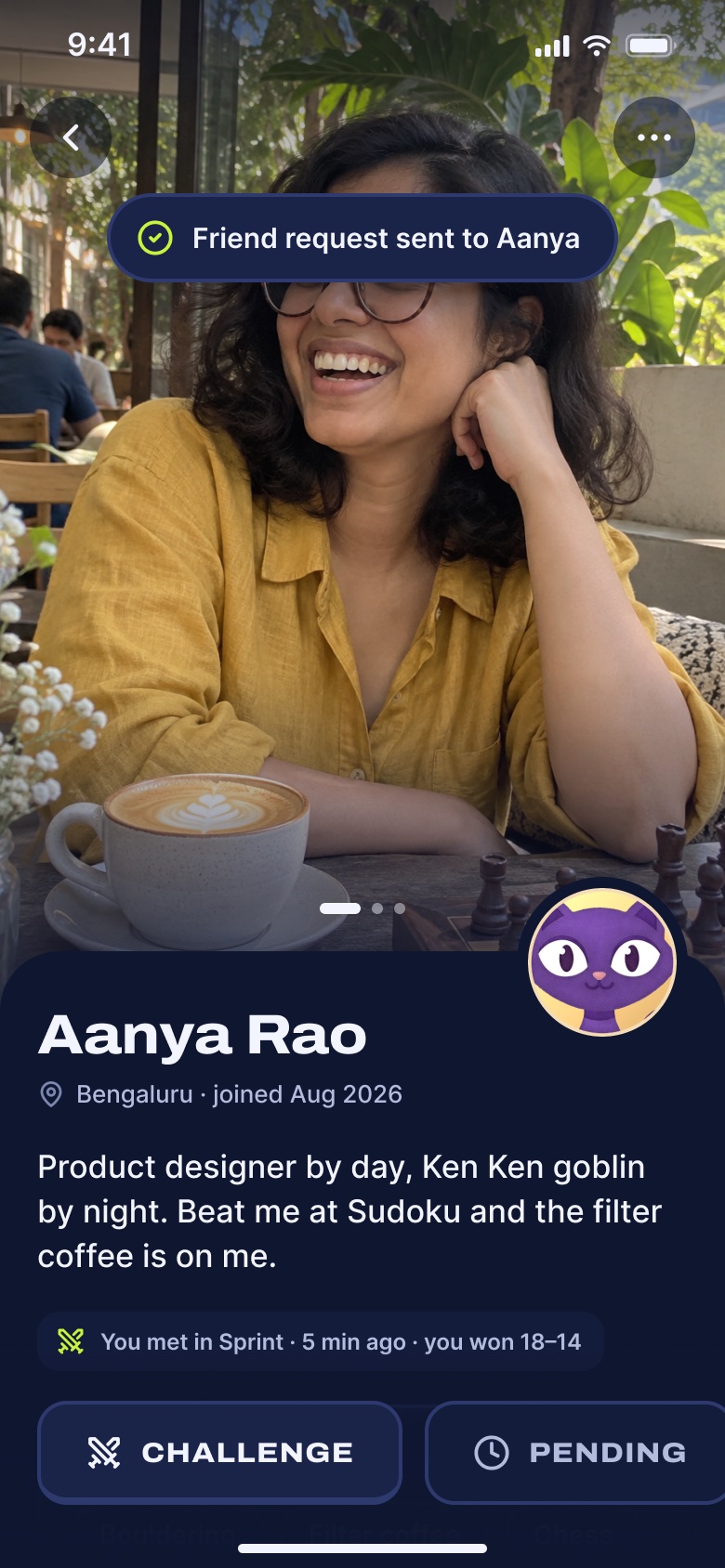
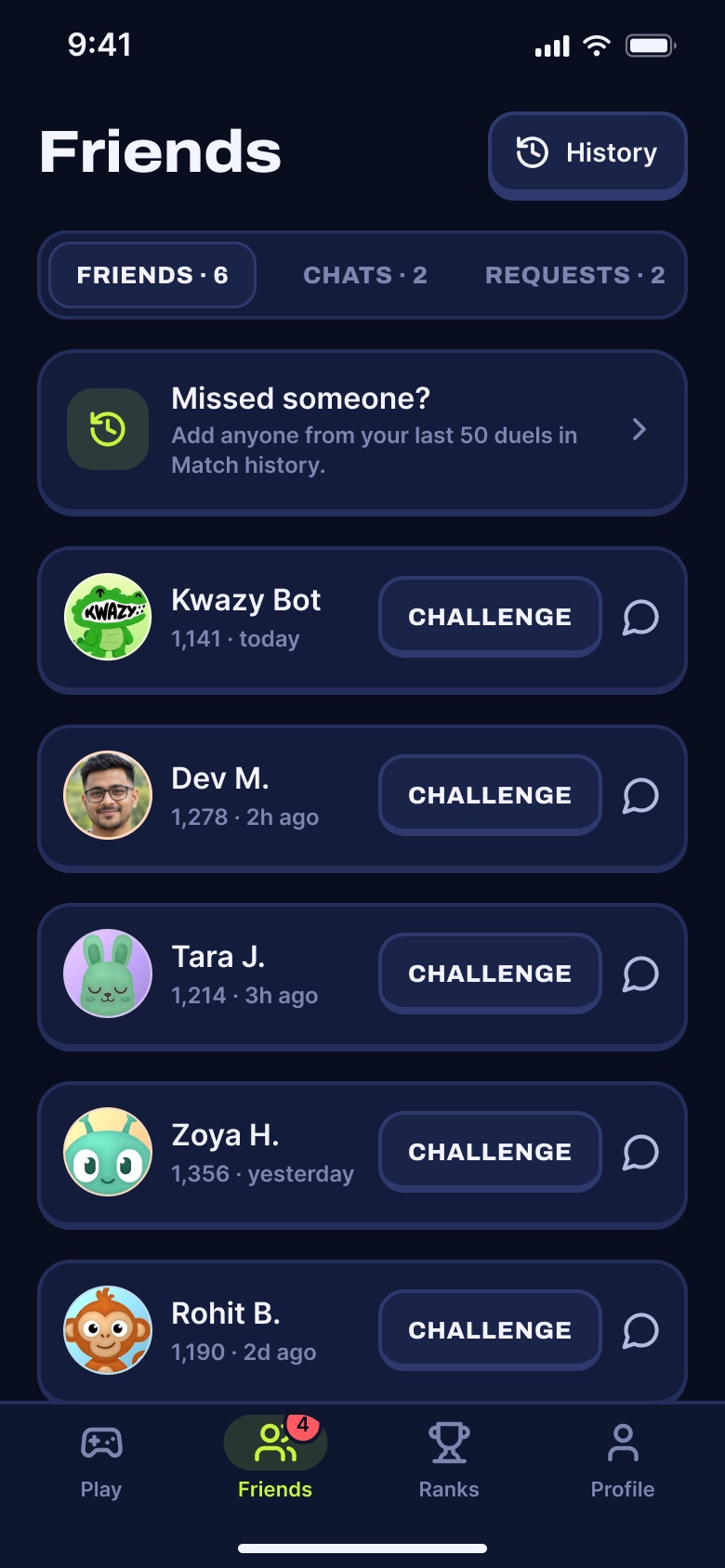
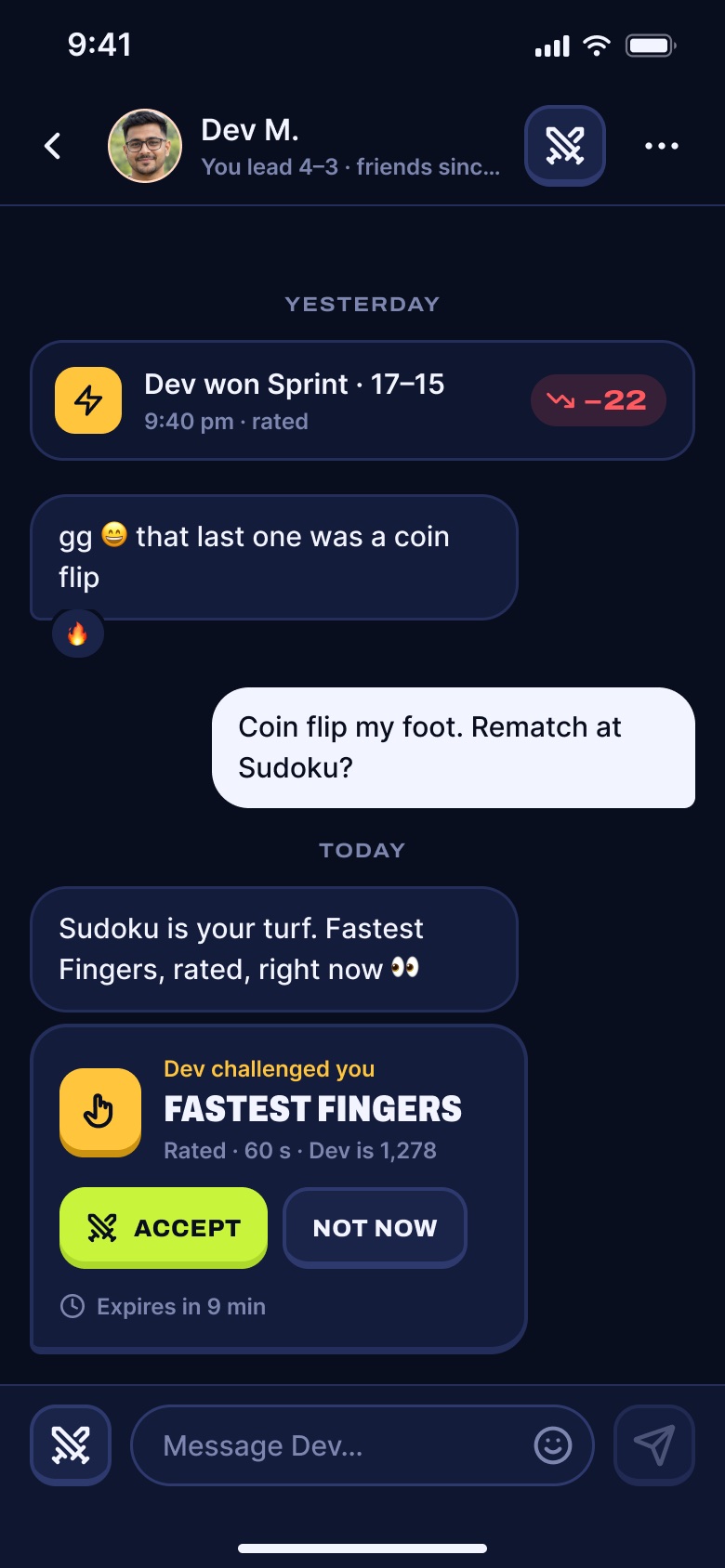
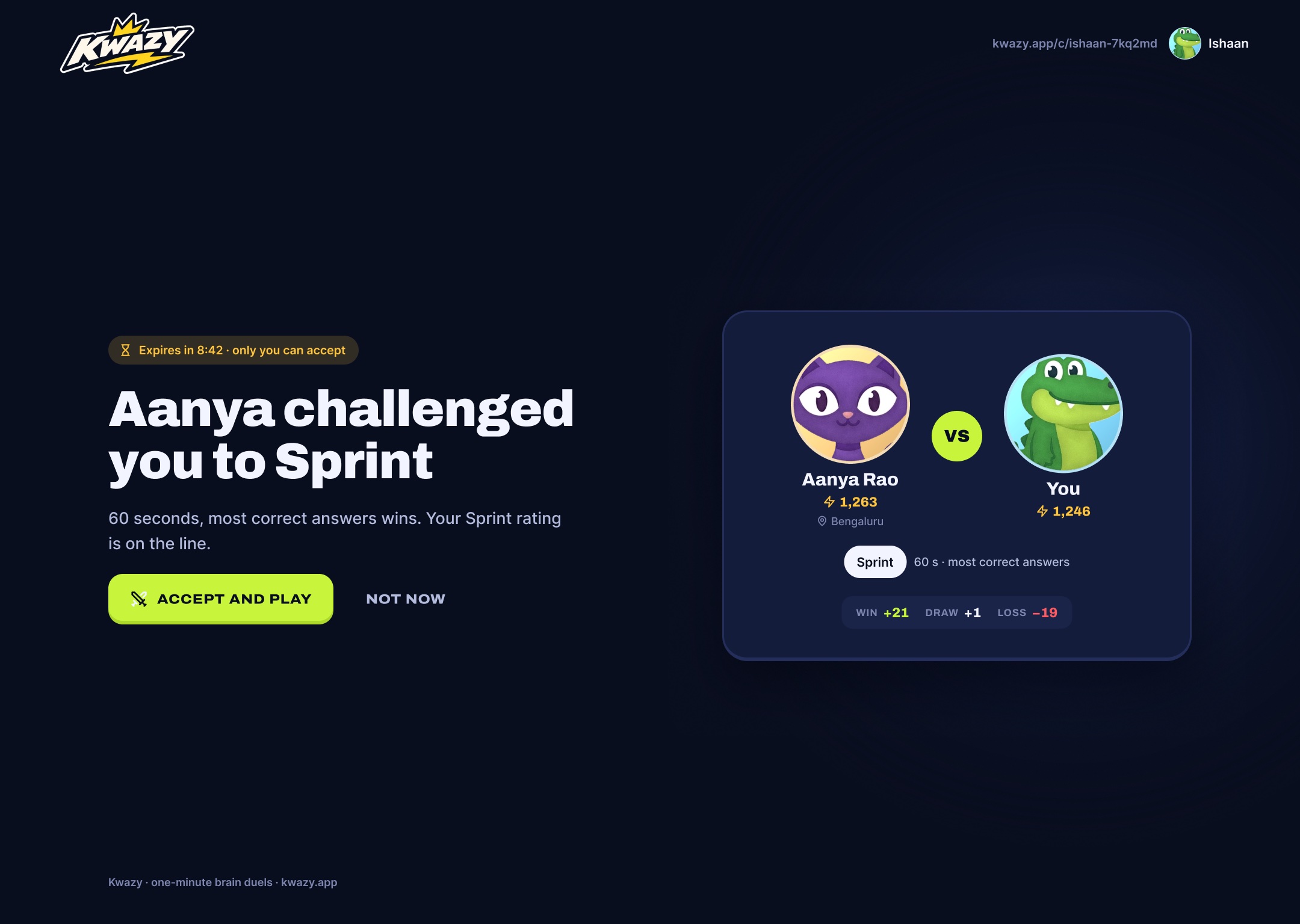
A stranger’s profile shows your head-to-head and an Add button. Chat opens only between friends, and a challenge can be sent right inside the thread.
The web app: the same loop, with room to breathe
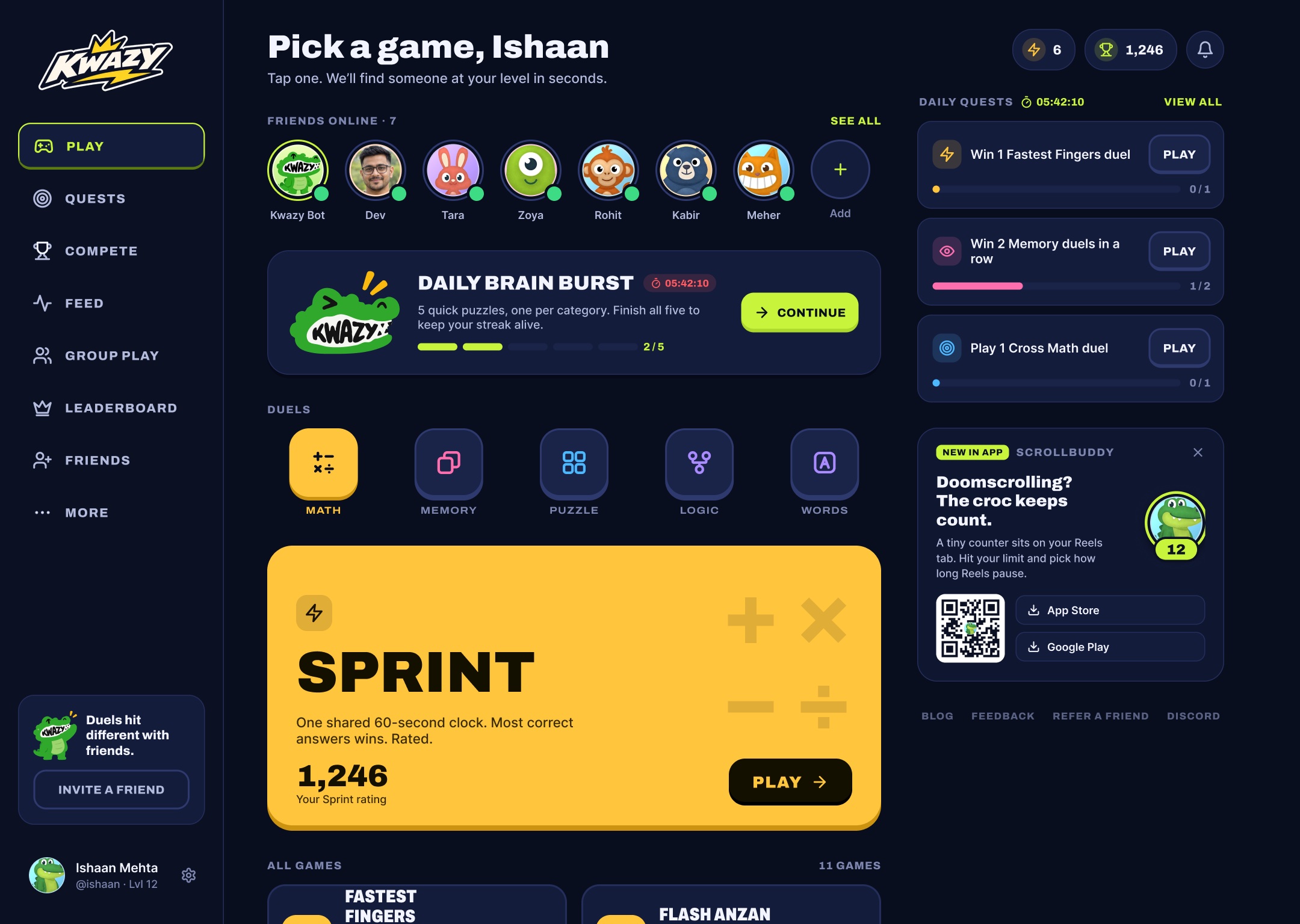
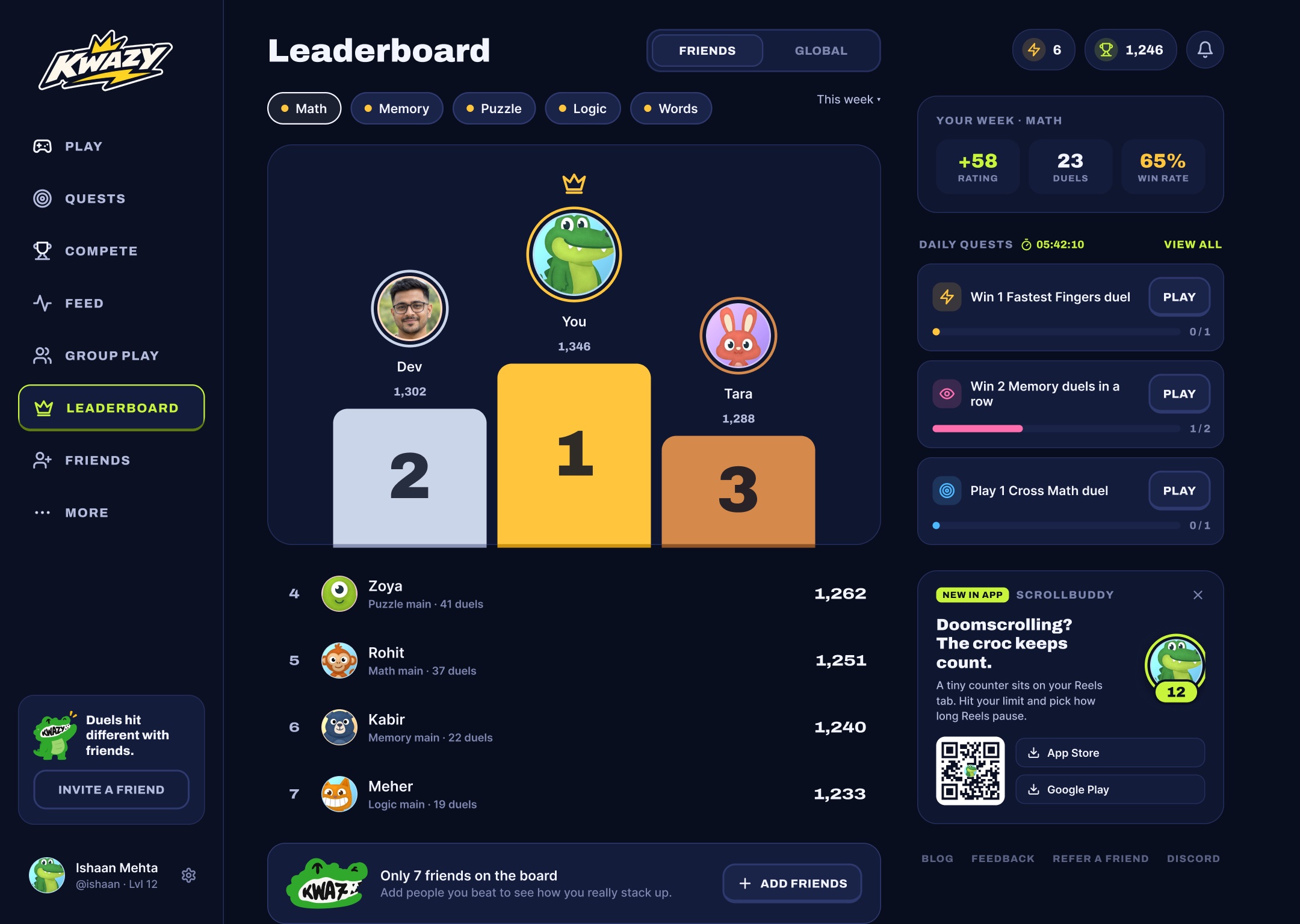
On a laptop the app gets a sidebar and side panels. Friends online, quick duels and your ScrollBuddy count stay in view while you pick a game. Guests can play before signing up and save their progress later.
Safety without a wall of rules
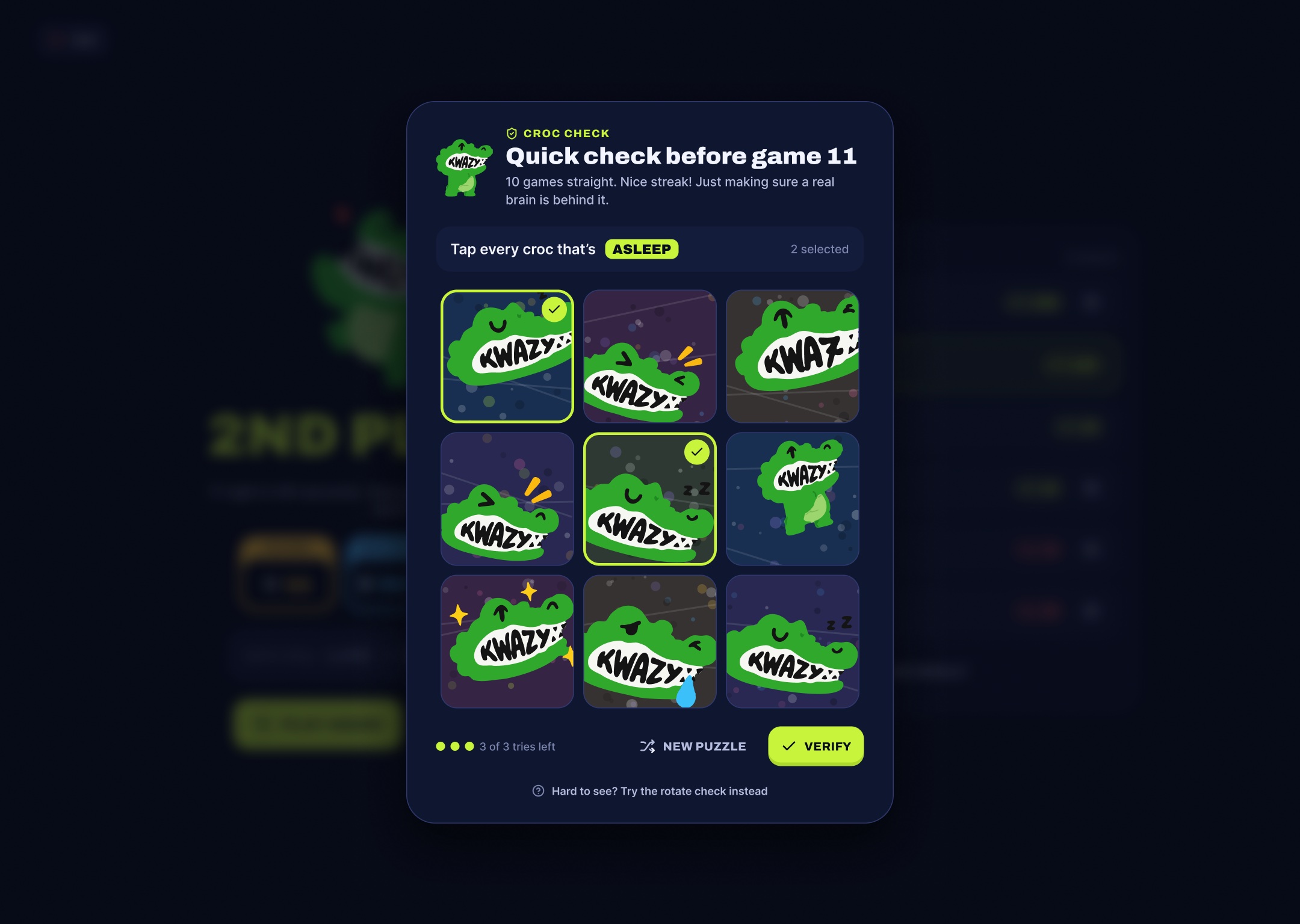
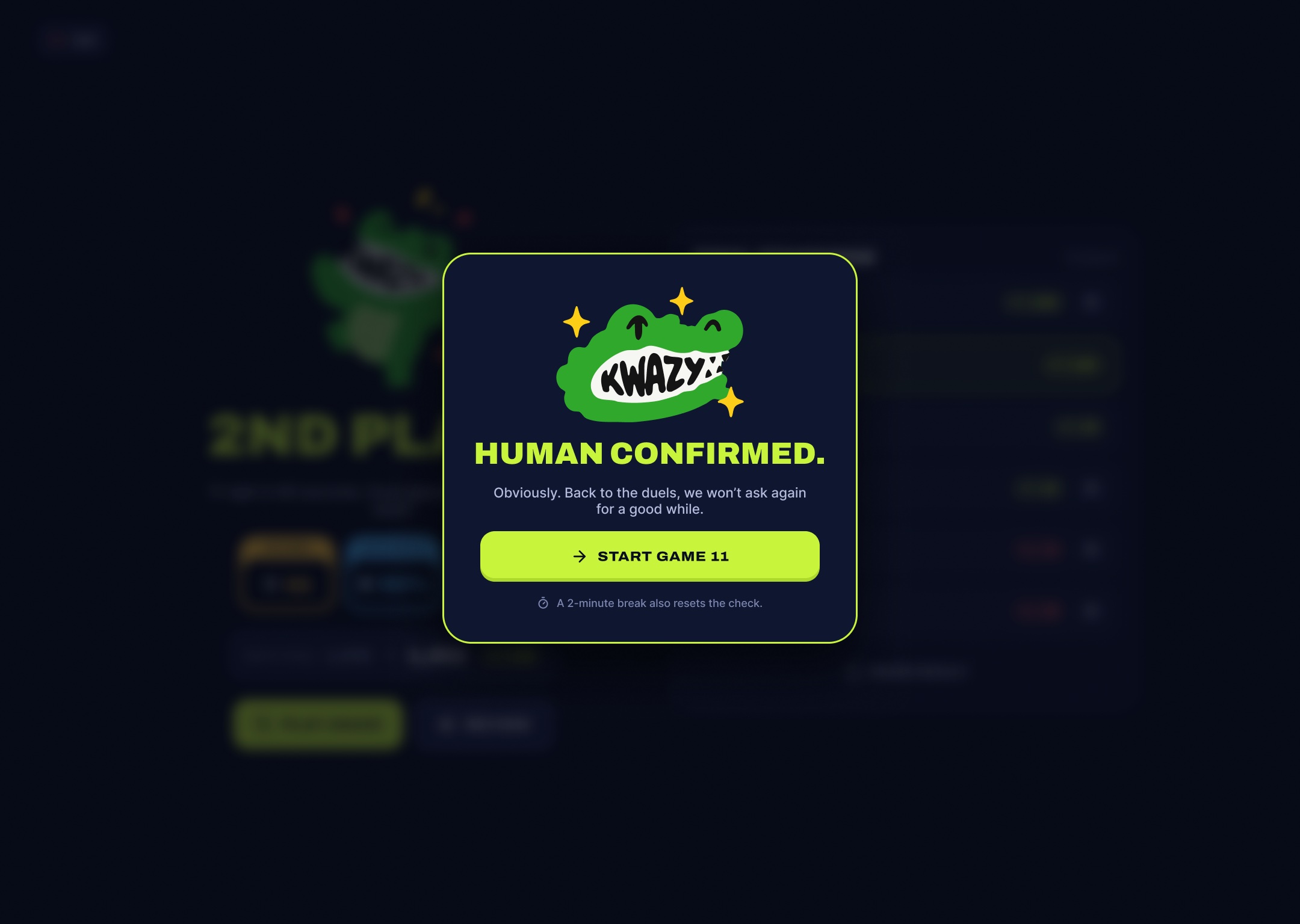
Teens aged 13 to 17 play on parent-approved accounts: nothing is played or recorded until a parent says yes, and a declined request deletes the number and birthday. Croc Check is the human check: pick the sleeping croc, or turn one upright. Three misses earn a breather, never a ban.
ScrollBuddy: why a games app counts your reels
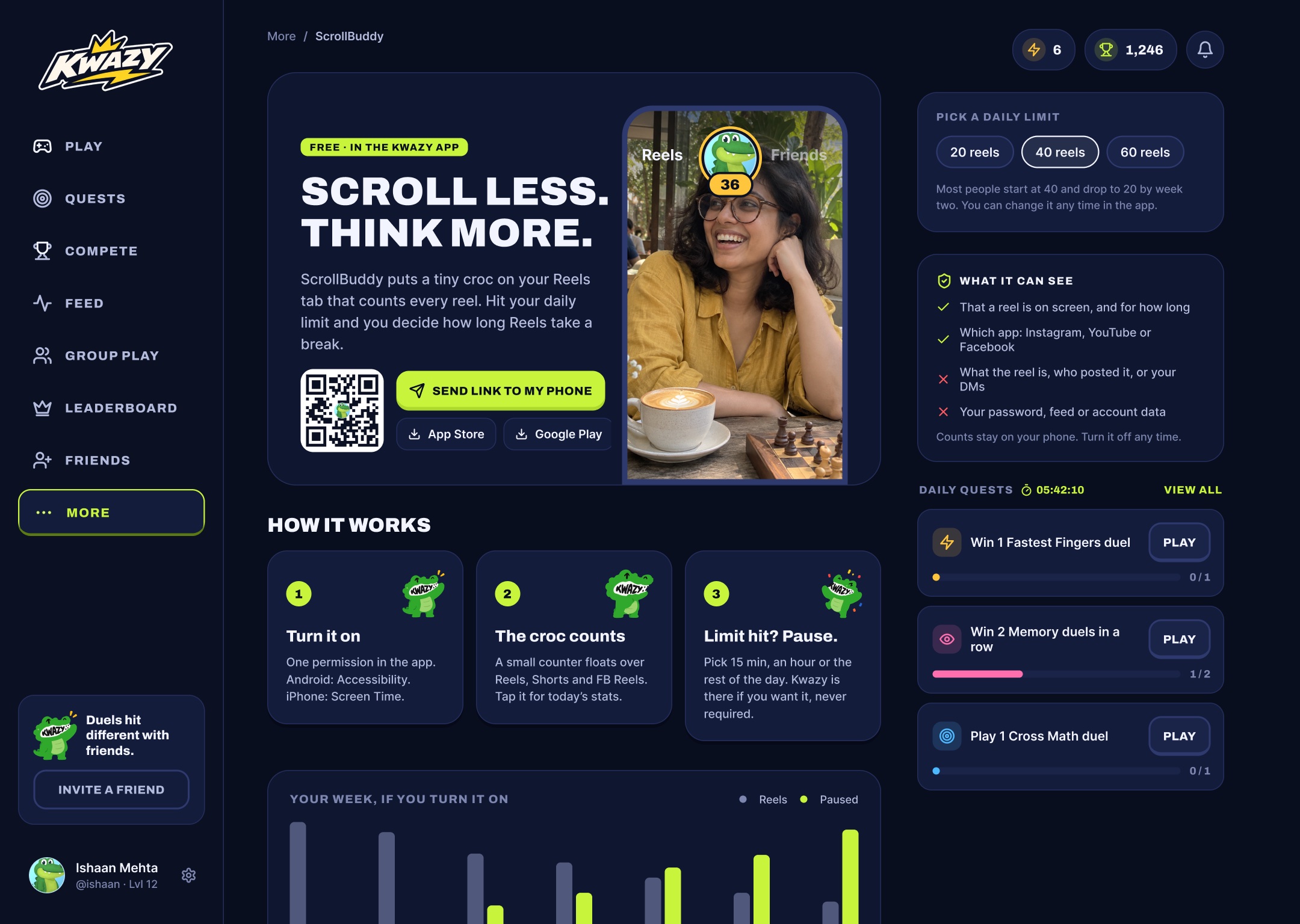
The gaps Kwazy wants are the same gaps Reels and Shorts already own. Blocking apps doesn’t work for long: people switch the blocker off and feel told off.
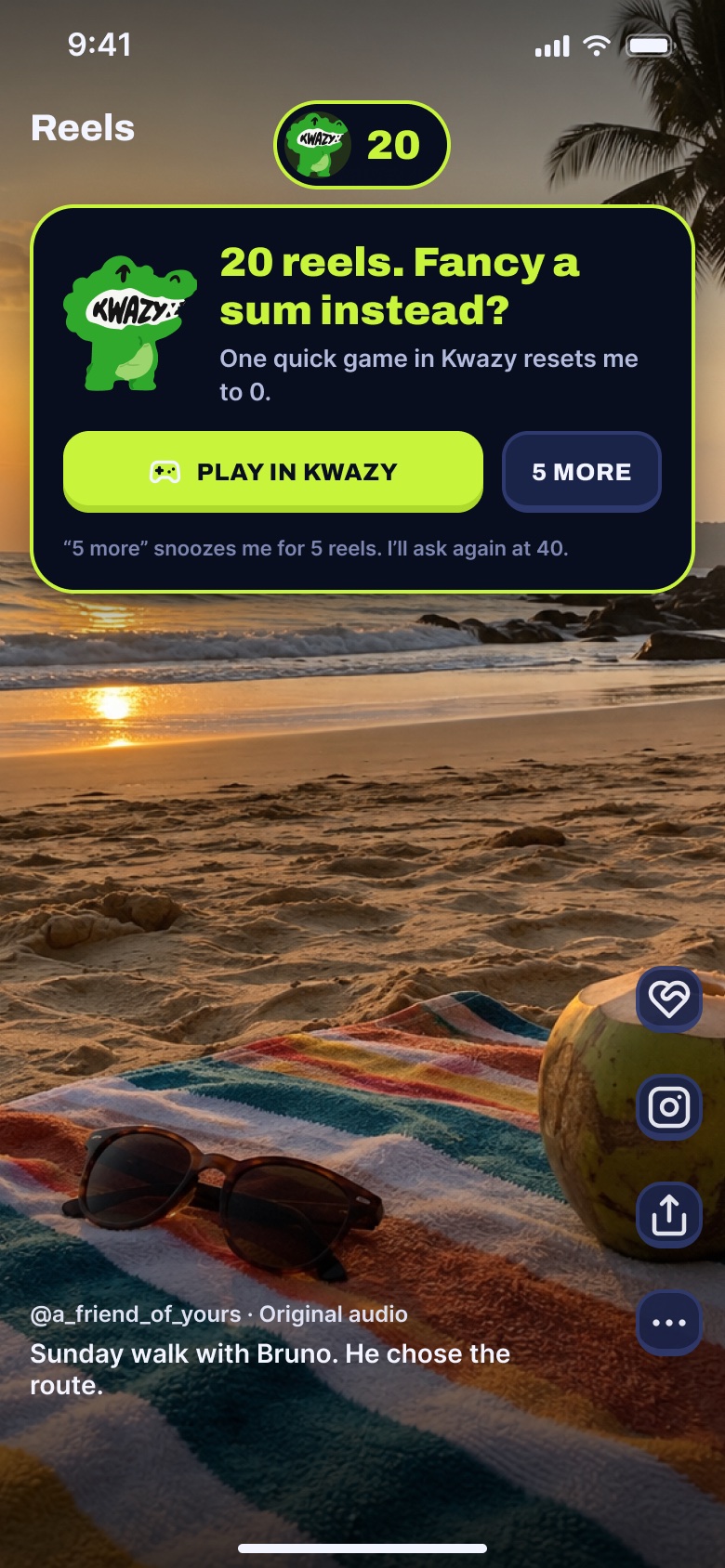
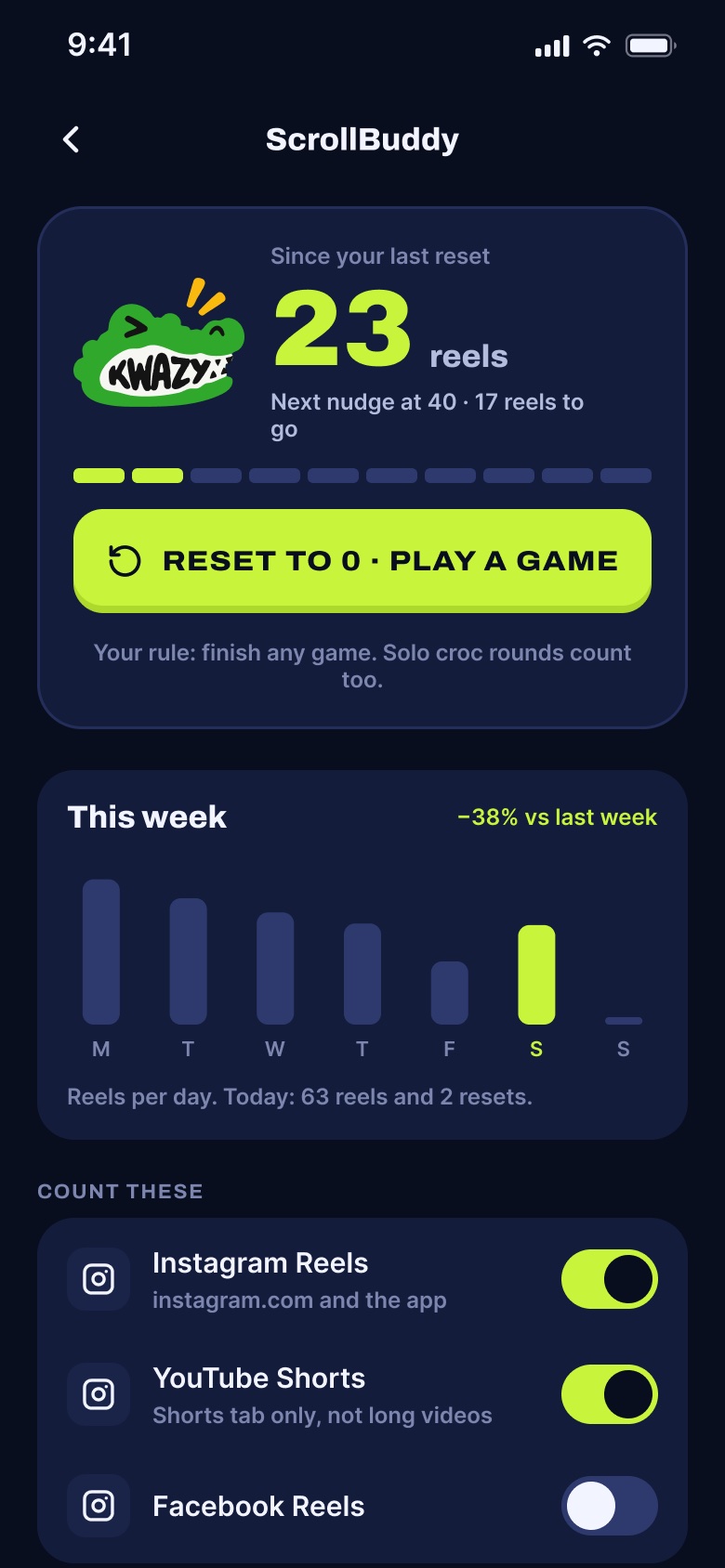
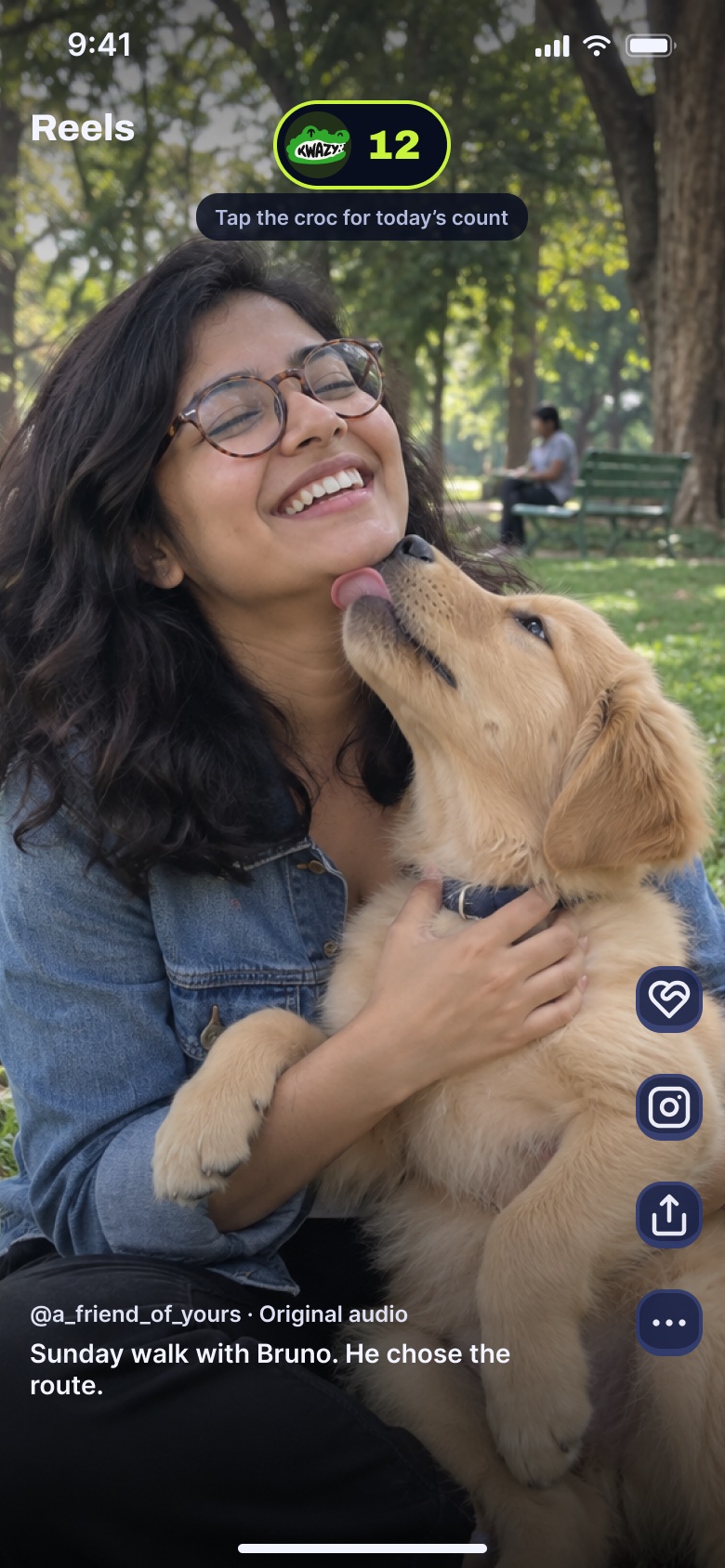
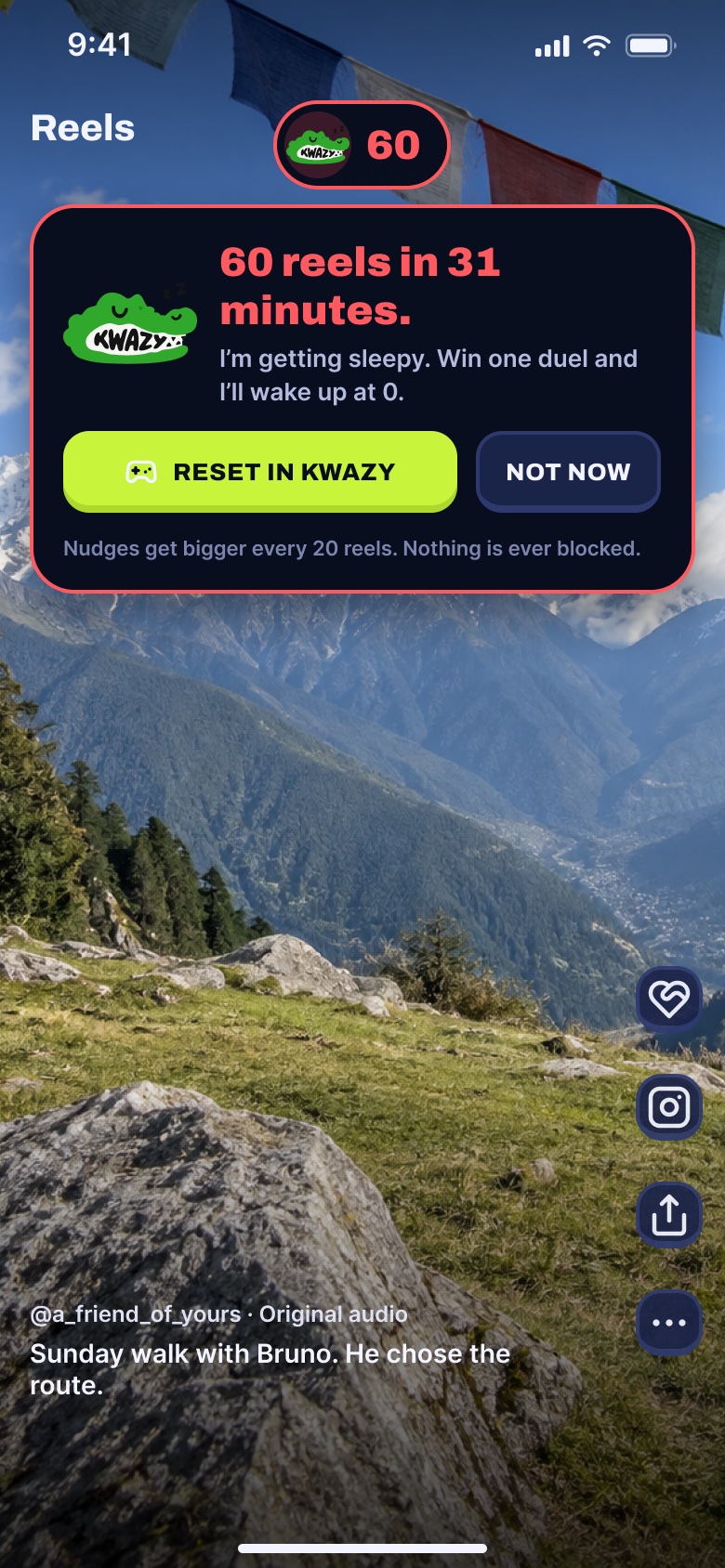
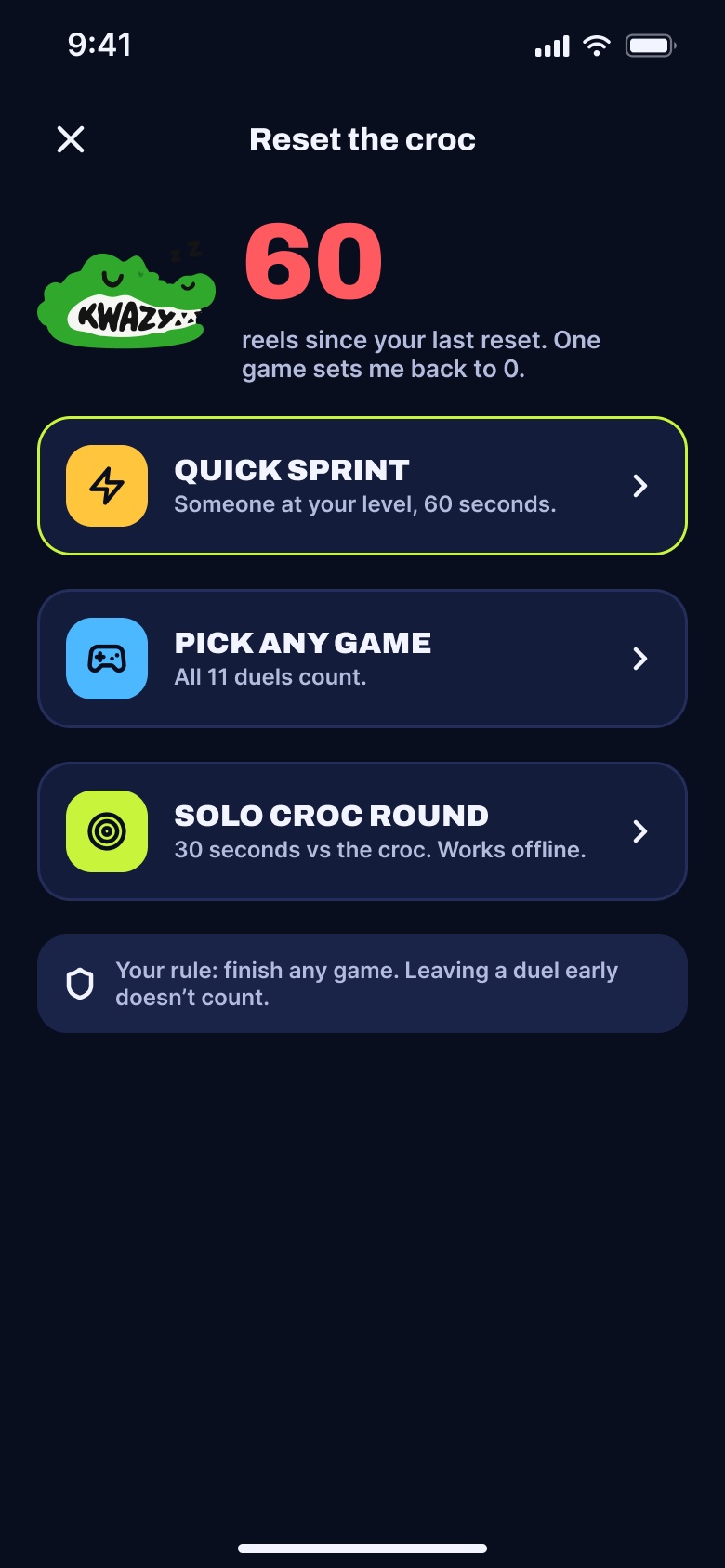
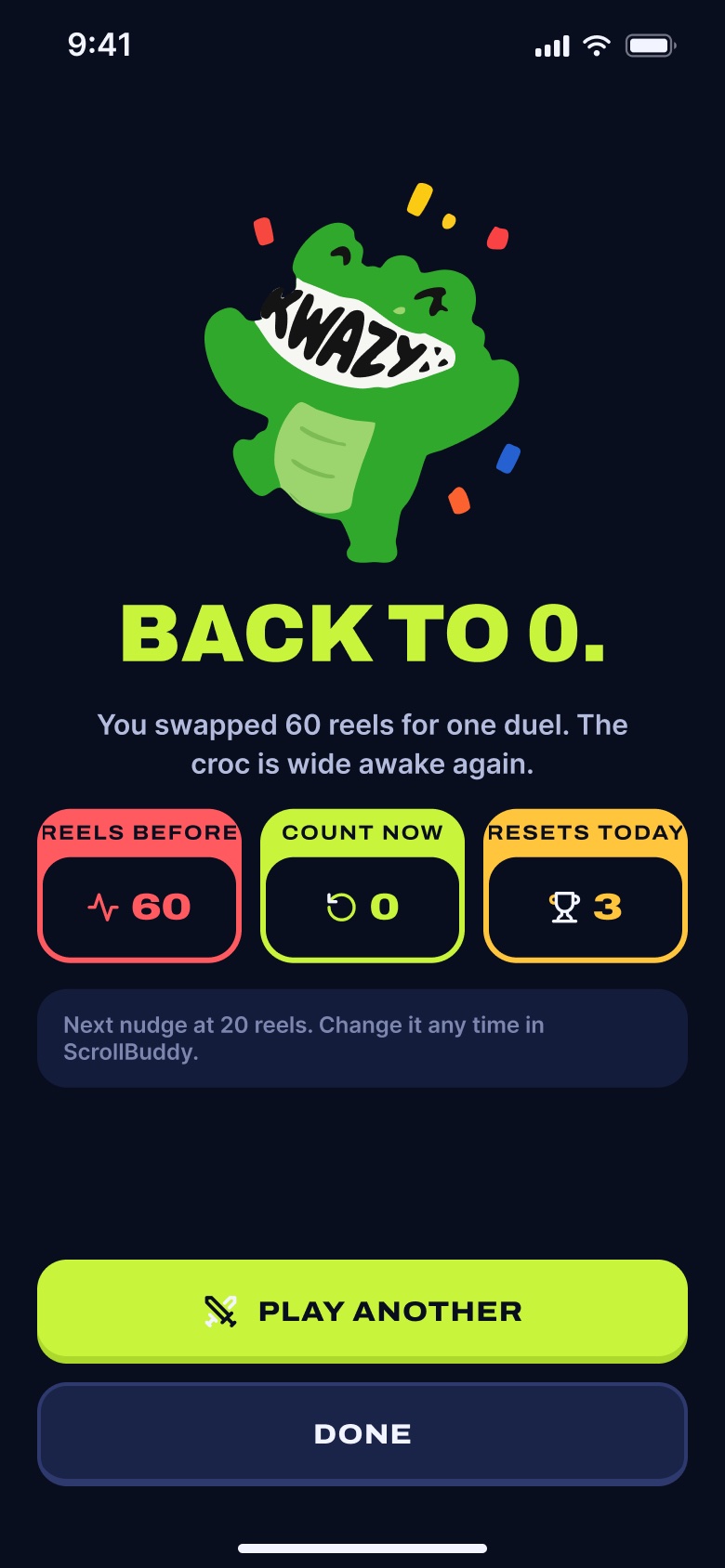
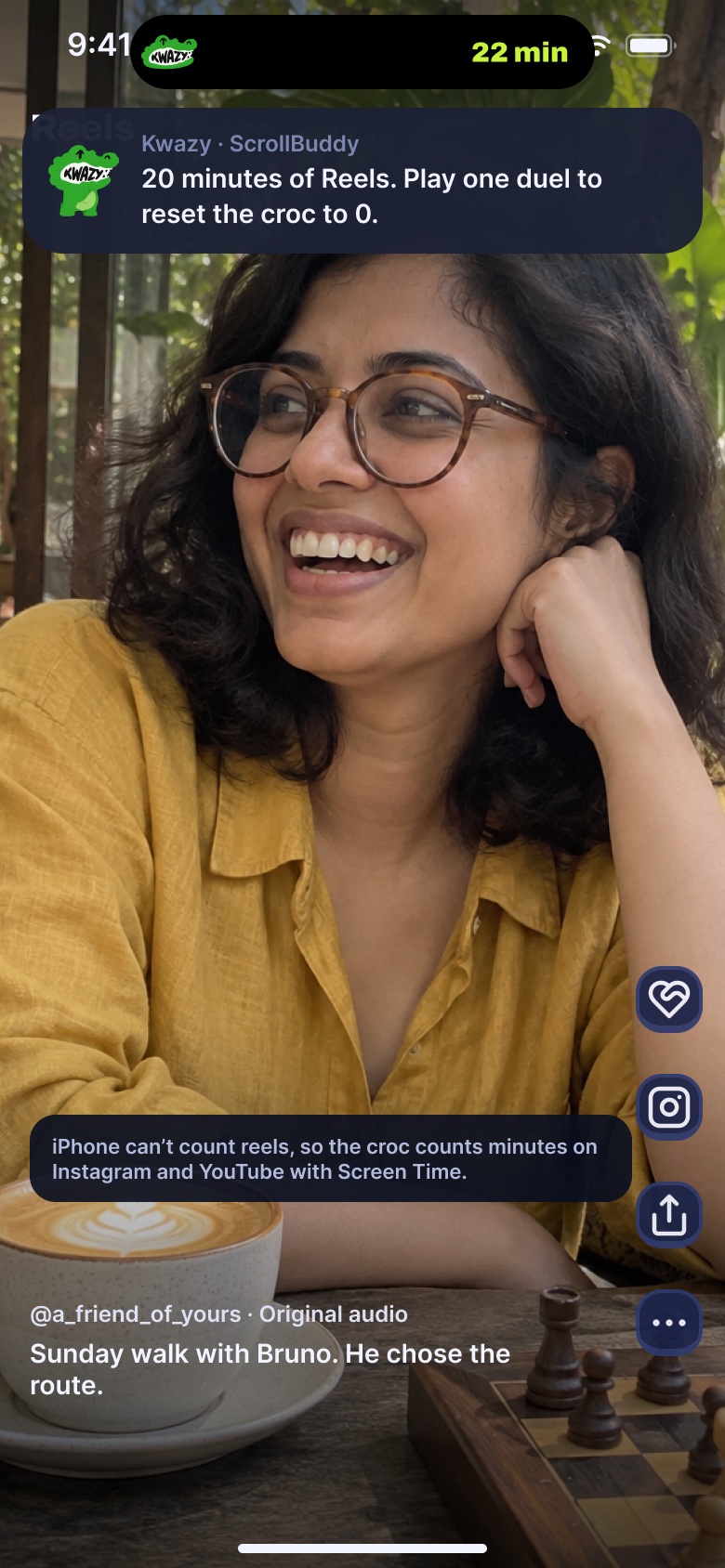
So ScrollBuddy never blocks anything. A croc counts the reels you watch and nudges you every 10, 20 or 30 with an offer: one quick game instead. The count goes back to zero only when you finish a game, or win one if you choose the harder rule. Counts and the weekly chart stay on the phone, and a 30-second solo croc round works offline and for teens still waiting on a parent.
A croc that counts, nudges and resets
On Android the croc sits on top of Reels as a small counter. On iPhone the same idea lives in the Dynamic Island, which needs Apple’s Screen Time permission, so that version is designed and waiting on it.
Kwazy Bot, the croc
Kwazy Bot is the first opponent every player meets, and their first friend. The croc gives the app its voice: short, warm, a little cheeky.
He does real work. He is the tutorial opponent, the bot that steps in when matchmaking takes longer than eight seconds, the counter in ScrollBuddy and the sleeping croc in Croc Check. I drew him as a vector parts library of heads, eyes, mouths, arms, legs and props, so any screen can get the expression it needs.
Ten of the head expressions from the croc parts library. Eyes and mouths swap freely, so the same croc can cheer a win, sulk at a loss or doze in Croc Check.
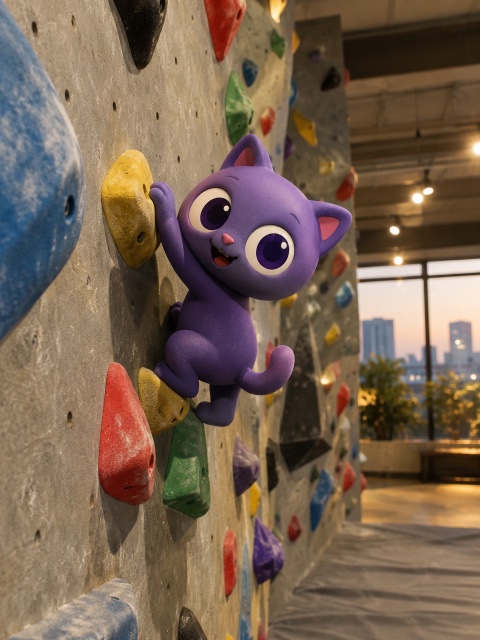
A cast of monsters, in real places
Players pick a monster instead of a photo. Before designing profiles and chats, I put the cast into the places our players actually are, to check the monsters feel like people, not stickers.



Every duel should end with someone new on your side.
The rule behind every result screen in Kwazy.
Let’s talk about
your product
The first consultation is free. Tell me what you’re building, and I’ll tell you honestly whether I can help.
Book a call